
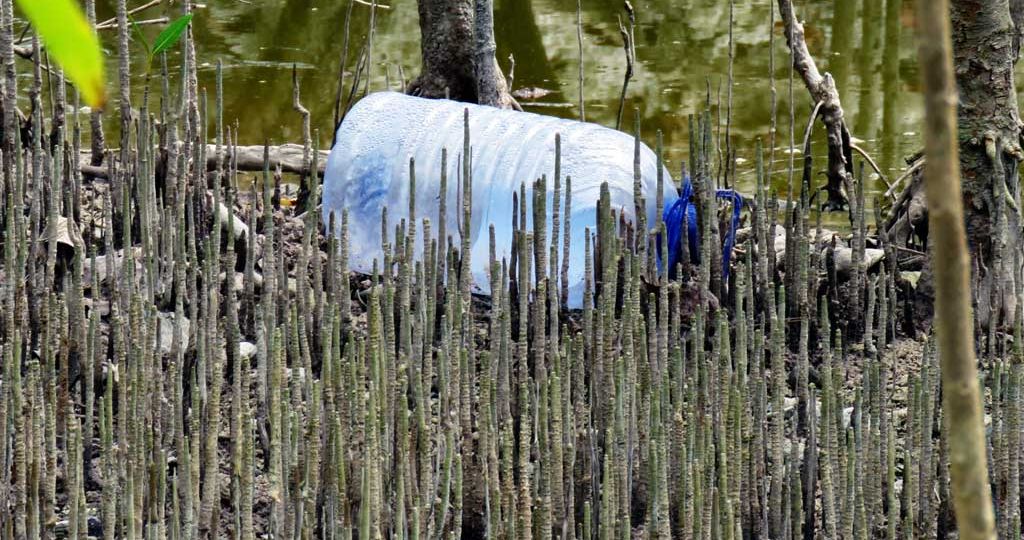
While looking in frustration at the thirty-three kilograms of trash collected from the Sanctuary at Roche Caiman in a single day, we asked ourselves: Why do people litter? Although this particular haul was tossed over the fence, every day a slew of plastic bottles, juice boxes, cans, pieces of Styrofoam and other items flow into the wetland along with the fish, crabs, and the occasional stingray and barracuda. This scenario isn’t peculiar to the Sanctuary; it is replicated all around our islands – on beaches, in mangroves, on hiking trails, and in urban environments. It appears that even after years of public education and clean-up campaigns, the message to keep paradise clean has still not resonated with some.
In September’s clean-up days and on other days, we come together to tackle just a small part of the mess we’ve made. There’s a buzz of excitement, and for many, it’s a day to take action. While we should be grateful for everyone cleaning up, we need to interrogate why we have this problem in the first place.

Rubbish collected from the Sanctuary at Roche Caiman
The psychology of littering
A lack of respect for self, community, and the environment is at the core of littering. Improperly disposing of trash is always an individual’s personal choice.
But there are factors common to people who litter, studies show. First, it is sheer laziness and carelessness, especially where bins are provided. Sometimes people do care, but if it’s too much of a hassle or inconvenient, then down goes the trash. This breeds a culture of habitual littering, with no thought given to the consequences. Secondly, some people believe, wrongly, that there will be someone else to clean up anyway, and that the responsibility for cleaning up lies elsewhere. Additionally, many people underestimate the impact of trash on the environment and human health, and don’t think their individual actions do any harm. And as long as it’s not in one’s space, it is not considered a problem – out of sight, out of mind.
When individuals use communal resources, they often prioritise their own needs over the collective good. This self-serving behaviour can lead to a lack of personal accountability for littering these communal spaces. It is also suggested that litter in an area can promote additional littering. Seeing others litter normalises the behaviour.

Cleaning up is a noble task. Not needing one in the first place, however, is the real challenge
Modernity and over-consumption
But we can’t talk about littering without taking into account what else drives the trash in our environment.
Littering is a symptom of our modern relationship with over-consumption. Today’s consumer culture thrives on the idea of constant change; everything is cheap, convenient, and readily available. Products are designed with a short lifespan, fuelling a relentless cycle of buying, using, and throwing. Consider fast fashion, which is the theme for this year’s Clean-Up Day, for example. In just one generation, we’ve moved from mending our clothes to buying new at the drop of a hat. Since the mid-20th century, we’ve also seen a significant rise in the production of disposable, single-use items, especially plastics. This plays a major role in the pollution crisis we face today. Trash doesn’t just appear out of nowhere. It begins with us – our shopping carts, our closets, and our desires.
But this is only part of a complex problem. It is also systemic. Corporations are the primary creators of these products and packaging, and the supply chains feed the consumption. Ultimately, all have a responsibility to prioritise reusability, repairability, and recyclability.
Cleaning up is a noble task. Not needing one in the first place, however, is the real challenge.