
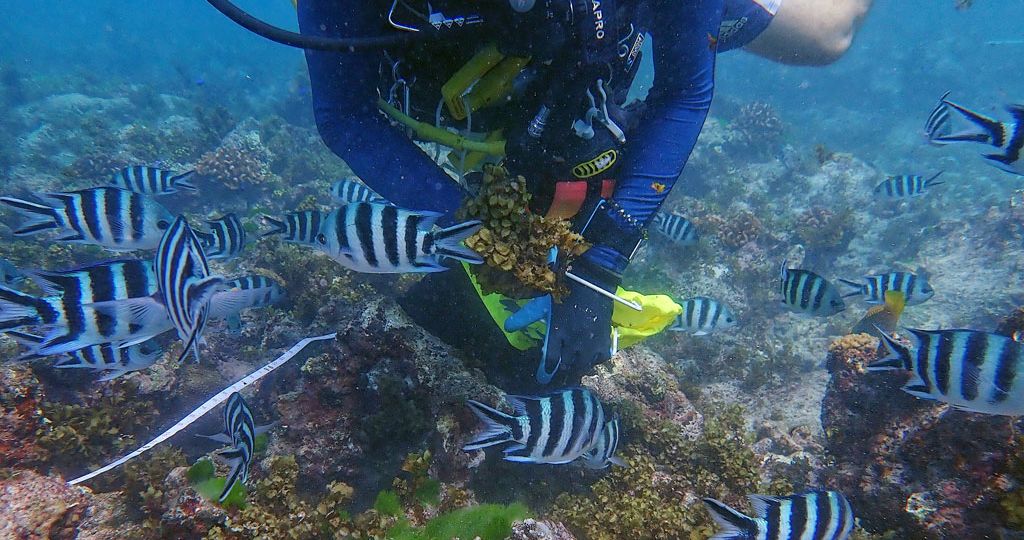
This month, an unusual underwater clean-up mission took place at Cousin Island Special Reserve. Over several days, divers descended to the reef with a common goal: to manually remove Sargassum, a type of seaweed that is suffocating corals.
One of the biggest challenges facing reefs in the Seychelles is the rapid expansion of seaweed, or macroalgae, including species such as Sargassum. While seaweed is a natural part of healthy reef ecosystems, stressed reefs can be overtaken by seaweed, which can outcompete corals. Over time, this can lead to declines in fish populations and overall biodiversity.
The manual “sea-weeding” effort is part of a Nature Seychelles’ pilot study aimed at tackling this issue, which is putting at risk years of dedication poured into restoring the coral reef at Cousin Island Special Reserve. The study aims to collect crucial information on the effectiveness of this method for reef conservation.
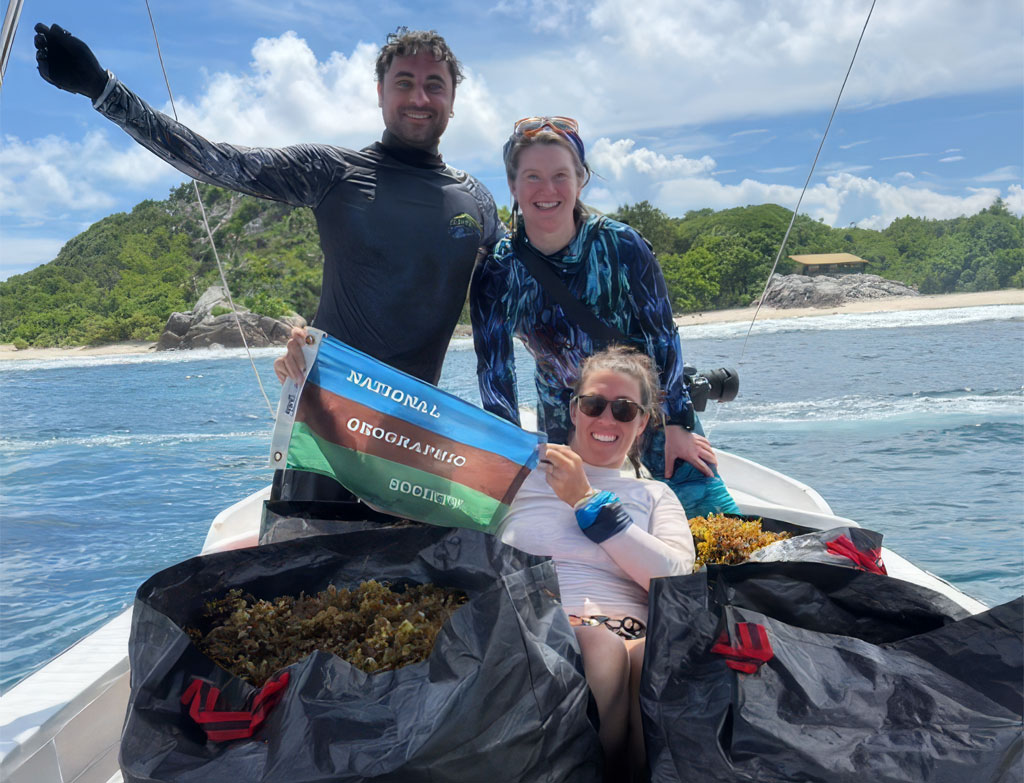
Funding came from the National Geographic Society through James Cook University Australia, with two National Geographic Explorers - Hillary Smith and Dr. Gabby Salazar collaborating on the study. (Photo - Gaby Salazar)
The study was carried out thanks to funding from the National Geographic Society through James Cook University (JCU) Australia, and in collaboration with two award-winning National Geographic Explorers – Hillary Smith from JCU and Dr. Gabby Salazar.
The Reef Rescuers team and the National Geographic Explorers monitored a 900 m² reef area within the Cousin Island Marine Protected Area, and marked nine plots of 100 m² each to assess the impact of manual removal.
“We are very lucky to have had the chance to work with the leading expert in this field. The successful results of this approach in other parts of the world give us hope for the reefs here at Cousin,” said Dr. Luca Saponari, the Reef Rescuers’ team leader.
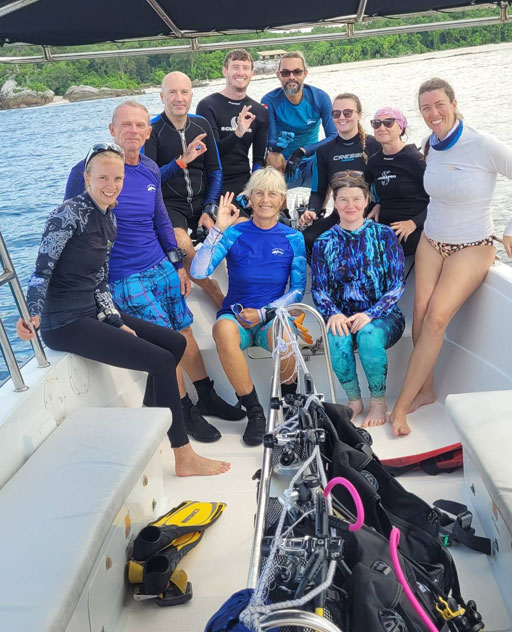
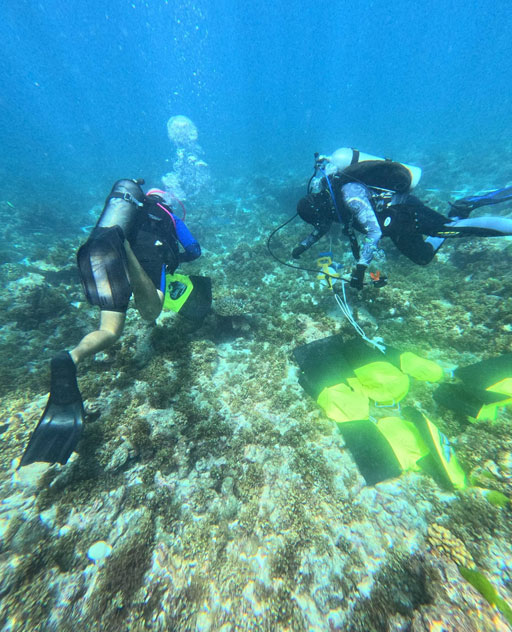
Volunteer divers from Whitetip Divers helped with the removal (Photos - Sabine Ploszonka)
To aid in the removal efforts, Nature Seychelles kicked off a “Dive with a Purpose” appeal, reaching out to local dive centres on Praslin and inviting certified Advanced Open Water divers to participate in this citizen science project. Whitetip Divers stepped up, sending eight enthusiastic volunteer divers.
“When Nature Seychelles reached out to me about supporting a campaign aimed at advancing research in coral conservation, Whitetip Divers was thrilled to join in once again – this time with the backing of some committed clients,” said Sabine Ploszonka, one of the divers.
About 570 kg of macroalgae from around 600 m² was collected, creating a visible change that will positively impact the reef and allow corals to thrive. It did not go to waste – it was donated to Seaweed Seychelles where it will get a second life as sustainable fertiliser.
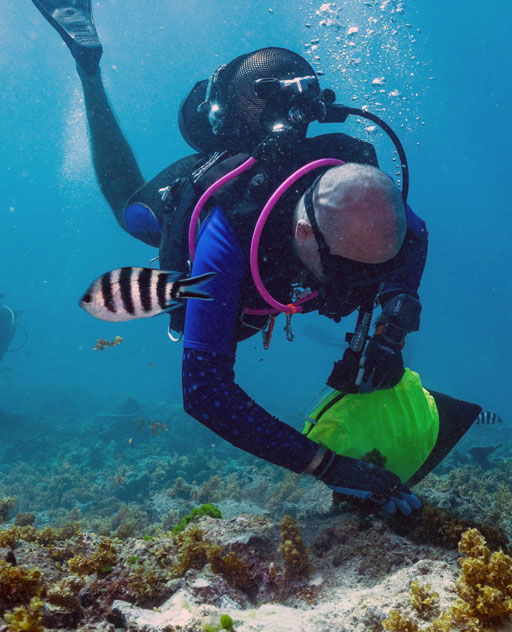
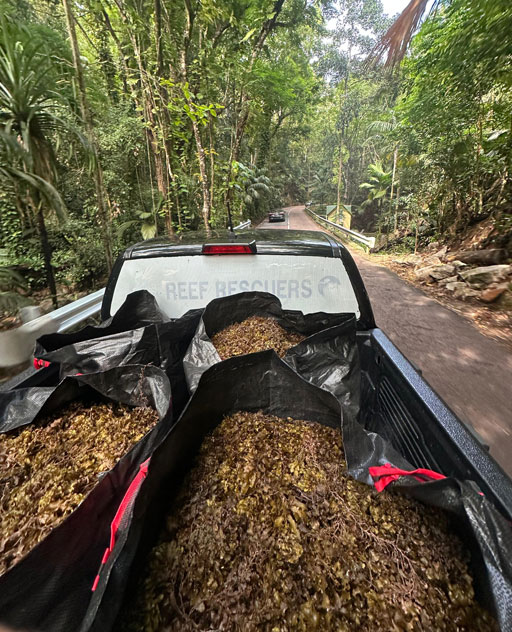
About 570 kg of macroalgae was removed and sent to Seaweed Seychelles
“People protect nature best when they become part of the rescue. This experimental project brought divers, scientists and local enterprise together to give Cousin’s reef a fighting chance,” explained Dr. Nirmal Shah, Chief Executive of Nature Seychelles.
“Seeing the amount of algae removed in just a few days shows both the scale of the challenge and the potential of community-led reef restoration. This project is about testing practical, scalable solutions for reef conservation, and we hope that it will become a model for other reefs globally. The enthusiasm and commitment from the Reef Rescuers team and local dive community has been inspiring, and we are excited to see what we can learn from the months ahead,” Dr. Smith from James Cook University, stated.
“The Reef Rescuers team have been amazing collaborators. We are very happy with the results of the first weeding effort and look forward to learning from this experiment together,” said Dr. Salazar.
The activities were not limited to diving. The National Geographic Explorers also engaged with 8 local students from Vijay International School who attended a half-day workshop to learn about corals and algae, snorkel, and become scientists for a day, thanks to Raffles Seychelles, Praslin.