
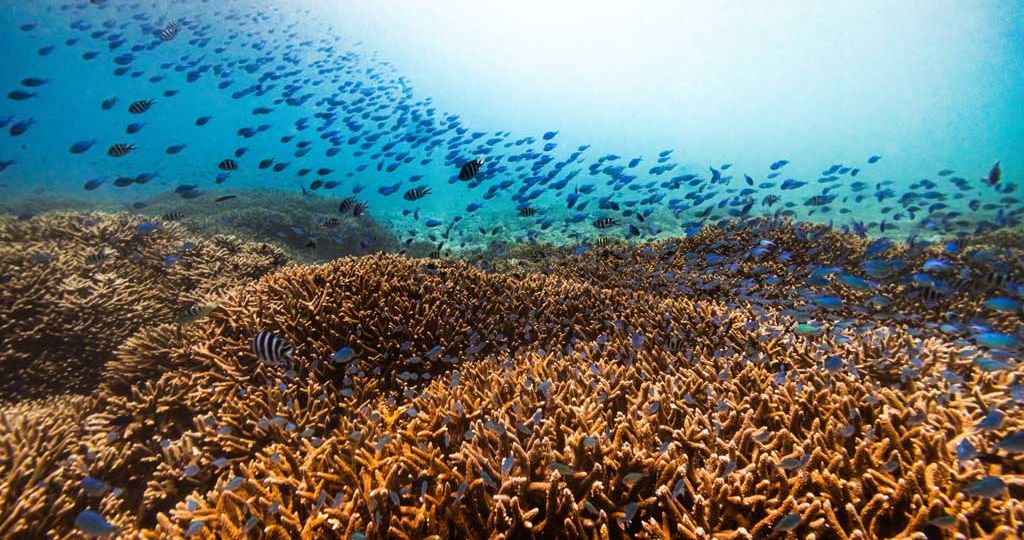
A fascinating new study from the Cousin Island Special Reserve in Seychelles, recently published in PLOS ONE, dives into the sounds of a reef undergoing restoration and how they compare to those from nearby healthy and degraded reefs.
A healthy coral reef is not just something you see. It is something you hear.
Scientists are increasingly turning to Passive Acoustic Monitoring (PAM) to gauge the health of these underwater ecosystems.
Unlike traditional visual surveys that focus on coral cover and fish populations, soundscapes reveal a wealth of information about biological activity and ecological processes that our eyes might miss.
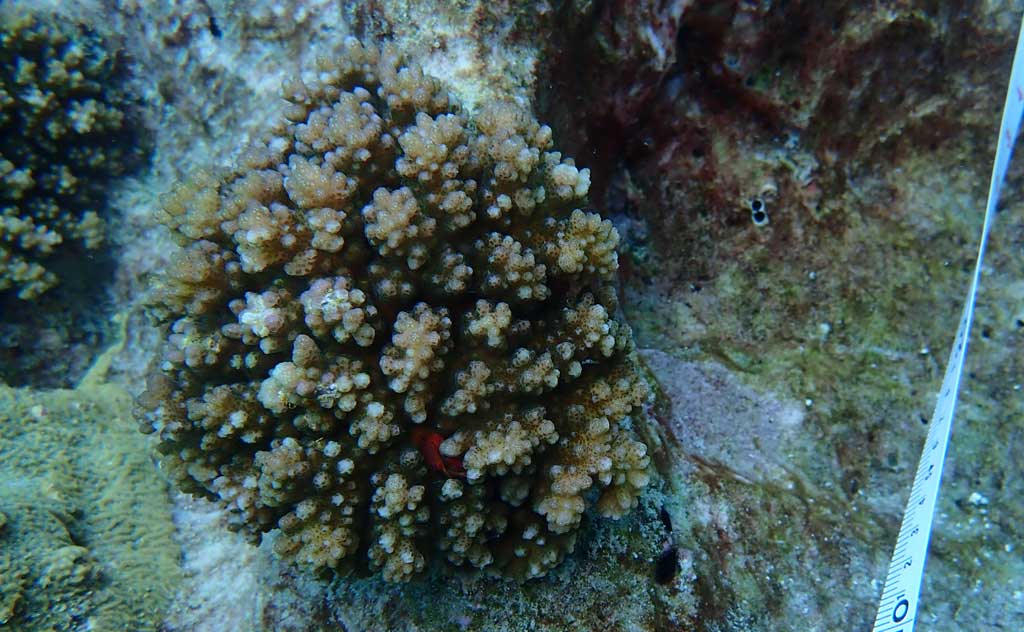
Unlike traditional visual surveys, soundscapes reveal a wealth of information
This research at Cousin Island aimed to show whether the soundscape change during active reef restoration. The findings tell a story that is more nuanced than a simple before-and-after.
Led by Emily Croasdale as part of her MSc in Freshwater and Marine studies, the study was a collaboration with Nature Seychelles at the coral reef restoration on Cousin Island, and the University of Amsterdam and Lancaster University. It was co-authored with Dr Nirmal Shah, Dr Luca Saponari, and Charlotte Dale of Nature Seychelles.
The researchers examined three reef sites around Cousin Island: one actively being restored, a healthy reference reef, and a degraded reference reef. They captured recordings over a full lunar cycle in November 2023.
To analyse the recordings, the team used two different methods. They manually listened to and counted the sounds made by fish. Then, they harnessed artificial intelligence and machine learning to identify broader patterns within the soundscape.
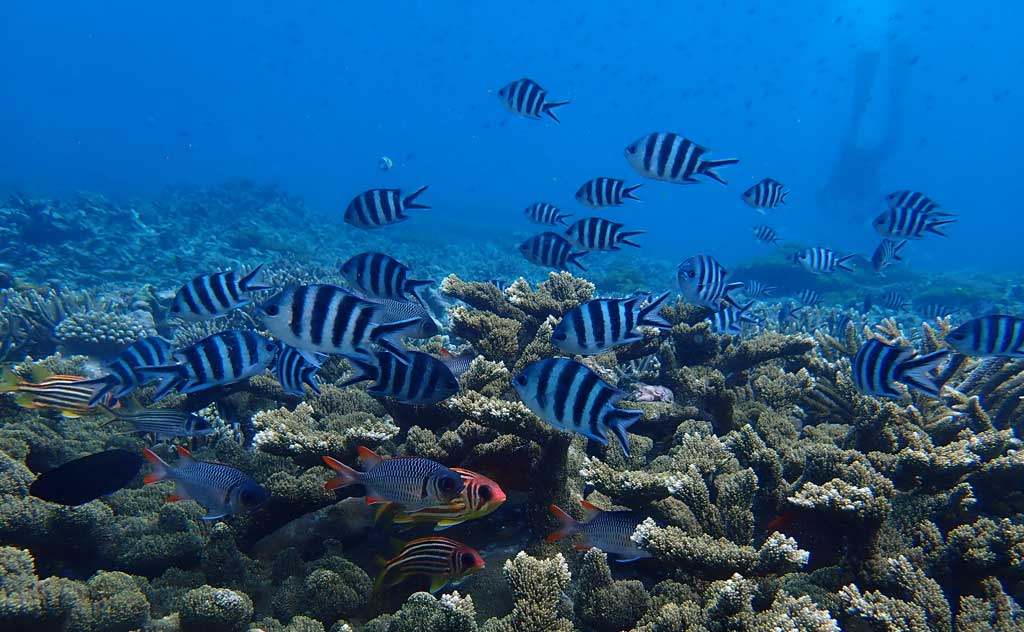
Three reef sites - healthy, restored and degraded - were compared
What they found
The two methods painted two different pictures. Manual analysis revealed that the fish call rates and sound diversity at the restoration site were similar to those of a healthy reef; both were over 50% higher than what was observed at the degraded site. This suggests that fish communities might be responding positively to the restoration efforts.
However, the machine learning analysis offered a more nuanced narrative. The AI placed the restored reef closer to the degraded one than to the healthy reef.
This indicates that various components of the reef ecosystem bounce back at different rates. Fish communities might rebound relatively quickly as the coral habitat improves, but other organisms and ecological processes could take much longer to recover.
The restored site seems to have regained some of the acoustic traits linked to healthy fish communities, while the broader ecological recovery is still in progress.
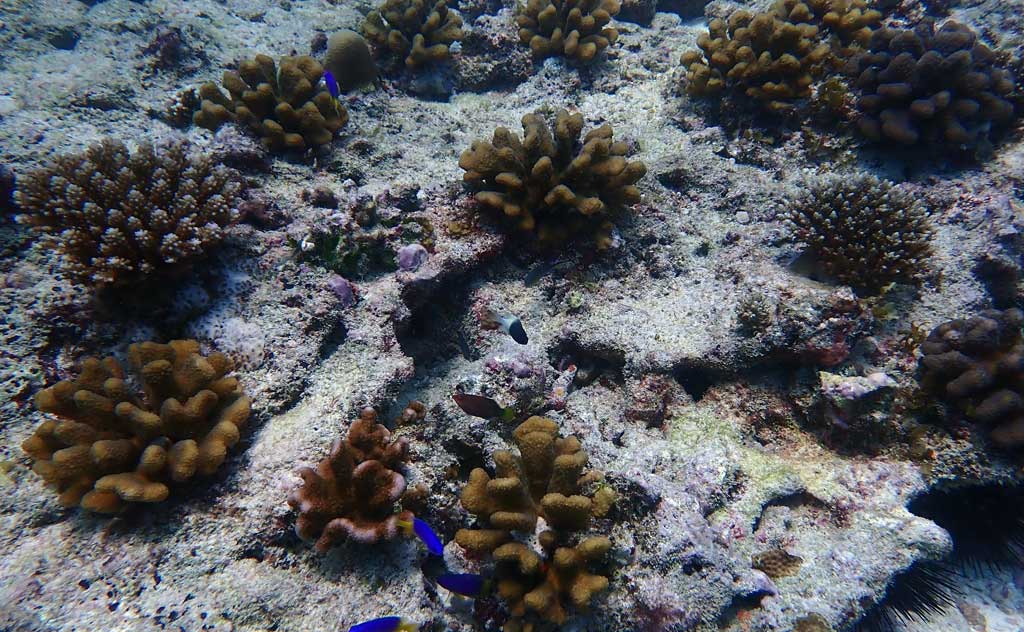
Machine learning analysis offered a more nuanced narrative.
These findings underscore the importance of using multiple methods to measure restoration success.
Traditionally, coral restoration projects have zeroed in on metrics like coral survival, growth, and coverage. While these factors are still crucial, acoustic monitoring provides a valuable additional perspective on how restoration impacts the larger ecosystem.
It also showcases how emerging technologies, like artificial intelligence, can assist conservationists in monitoring ecosystems more effectively.
Additionally, the study achieved something remarkable: it produced the first-ever coral reef soundscape recordings in the Seychelles!
“It’s so exciting to be able to share this important work, which harnesses the power of artificial intelligence for an amazing cause: to support coral restoration work in Seychelles and beyond!” says lead researcher Emily Croasdale
“The future of conservation will not rely on a single measure of success. By combining ecology, acoustics and artificial intelligence, we are getting a deeper understanding of how life returns to the reefs we are rebuilding,” Dr. Nirmal Shah, Nature Seychelles Chief Executive said.
Top Photo: CANON World Unseen