
On the morning 21st July, the Cousin Island team went out to carry out seabird monitoring as is the norm during the months of July to September.
They did not get far before they noticed many tracks on the beach, along with a large crater, the tell-tale sign that a Green turtle (Chelonia mydas, Torti-d-mer in Creole) had come ashore the previous night.
They checked the area and noticed that she had made four nesting attempts, but all failed. This excited the team because it meant there was a chance she would come back and try again the next evening.
After the sun went down, the team prepared to go out, hoping to intercept her sooner rather than later (scientists need sleep too)!
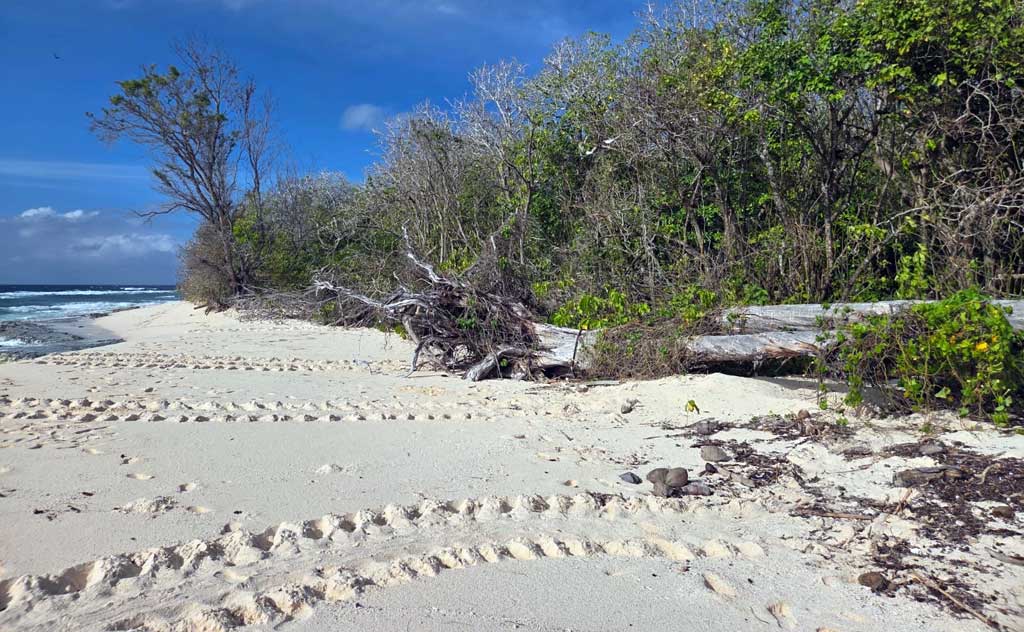
Tracks were the first signs they spotted
The first patrol yielded nothing, so after a brief nap, the team went out again. Using red lights, they patrolled the beach and encountered a fresh track going up from the shore.
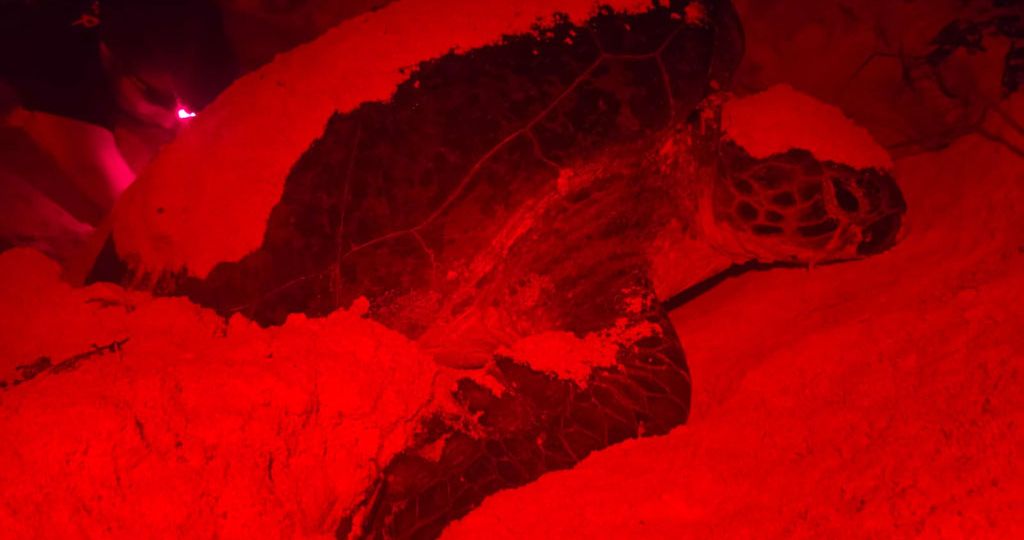
They followed it, and soon the sound of sand being thrown could be heard. Emerging from the pitch-black darkness, sand, and sea spray, the team spotted the turtle body-pitting and preparing to dig.
After the team waited patiently behind her, she finally settled into a laying position, and after a few contractions, the eggs began to emerge. Unfortunately, the turtle had not managed to nest high enough on the beach. A quick check of the tide chart and an inspection of the high water mark revealed that this nest would be affected by the approaching tide.
This is sadly becoming more common as the ever-encroaching erosion continues to damage the vital nesting beaches of this Special Reserve.
Fortunately, the team have got translocations down to a fine art, and her eggs were moved promptly and safely to a new location.
The turtle was measured and checked. She was already tagged – a database check later confirmed she’d first been recorded on Cousin back in 2022, bringing back memories of her first encounter with the team.
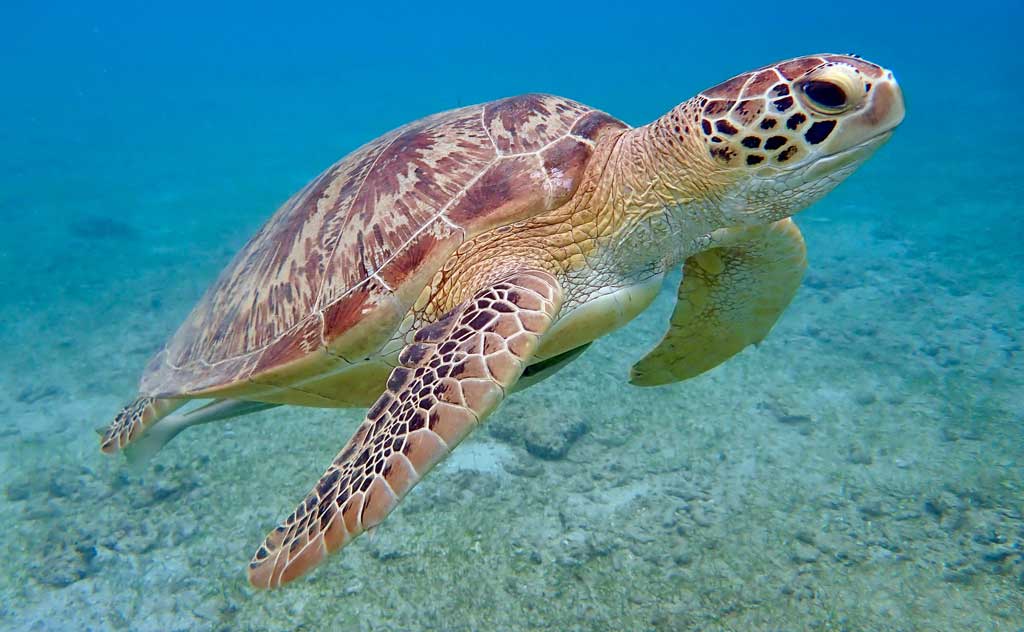
Green turtles don't nest in large numbers on Cousin Island
Back in 2022, the former Chief Warden encountered her as he stepped outside his house one night. Even back then, her site selection was not ideal, and the nest needed to be translocated. This turned out to be a good decision because the location was washed away within a few weeks. The iconic tree by the coastline where she nested was also uprooted and now lies broken on the beach. She went on to nest four times that season.
On that night, however, the excitement was palpable given how rare Green turtles are on Cousin Island and the surrounding area. The staff witnessed her full nesting process, and when she laid, she was tagged and photographed with red lights and night cameras. Tagging turtles is done exclusively by trained staff and is essential for monitoring purposes. By identifying individual turtles, we can gather valuable information, such as the number of females that come to nest, the intervals between nesting seasons, and the total number of nests per season.
Flash forward to 2026, and it was déjà vu and a mix of excitement and energy, as it never gets old witnessing turtles nesting. Seeing her again was a positive sign that she is alive and returning to lay more eggs for future generations.
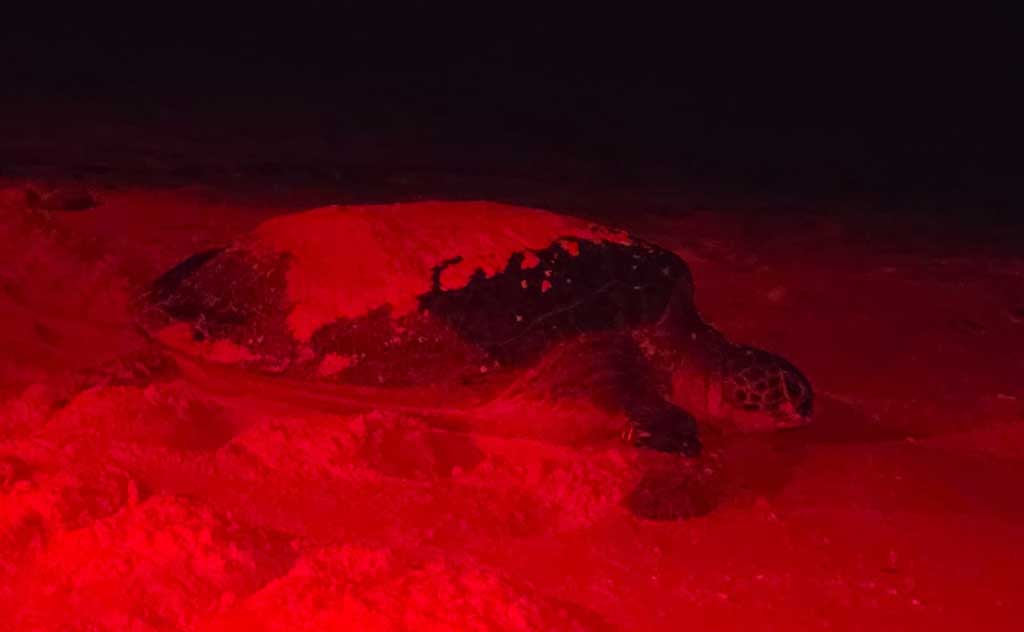
She nested four times in the last season
The team are hopeful she returns to nest again over the next few weeks and eagerly anticipate her return. Although it may require more late nights, ensuring the protection of her eggs and confirming her presence makes it worthwhile.
If you would like to know more about the work we carry out on Cousin Island Special Reserve, the importance of preserving spaces like this for wildlife, or would like to visit or volunteer with us, follow us on social media or get in touch.
Chris Tagg is the Science Officer on Cousin Island Special Reserve