
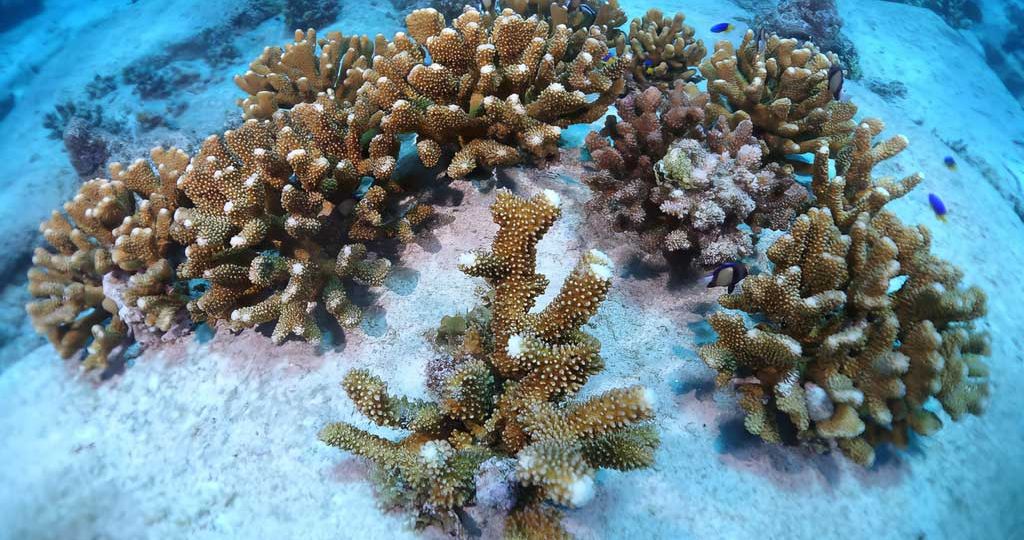
Although coral reefs are frequently referred to as the “rainforests of the sea,” they have recently come to represent the climate crisis. Across the Indian Ocean, the impacts of climate change are becoming increasingly evident as rising temperatures and coral bleaching wreak havoc on marine ecosystems.
In Seychelles, where these reefs play a crucial role in protecting coastlines, supporting fisheries, and boosting tourism, the impact is evident. However, in 2025, a Nature Seychelles-led coral restoration initiative brought a glimmer of hope by reshaping coral conservation in Seychelles and the region.
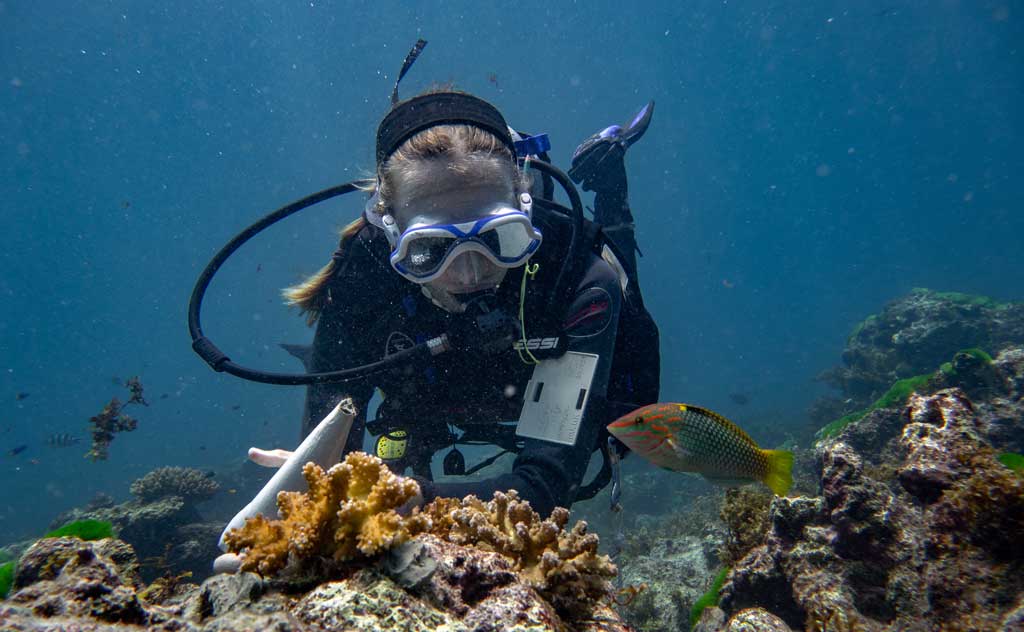
Outplanting corals (Photo: Hugo Bret)
Our coral restoration initiative is being carried out on Cousin and Praslin Islands and is currently funded by the Adaptation Fund – through UNDP and the Government of Seychelles – under a regional project with Mauritius. It has been making consistent and significant progress.
One of its standout achievements is the successful cultivation of 50,000 coral fragments in oceanic nurseries between 2021 and 2025. These nurseries provide a safe space for corals to grow before they’re outplanted in damaged reef areas. 30,000 corals have already been outplanted in that period, helping to rebuild the reef and restore habitats for marine life.
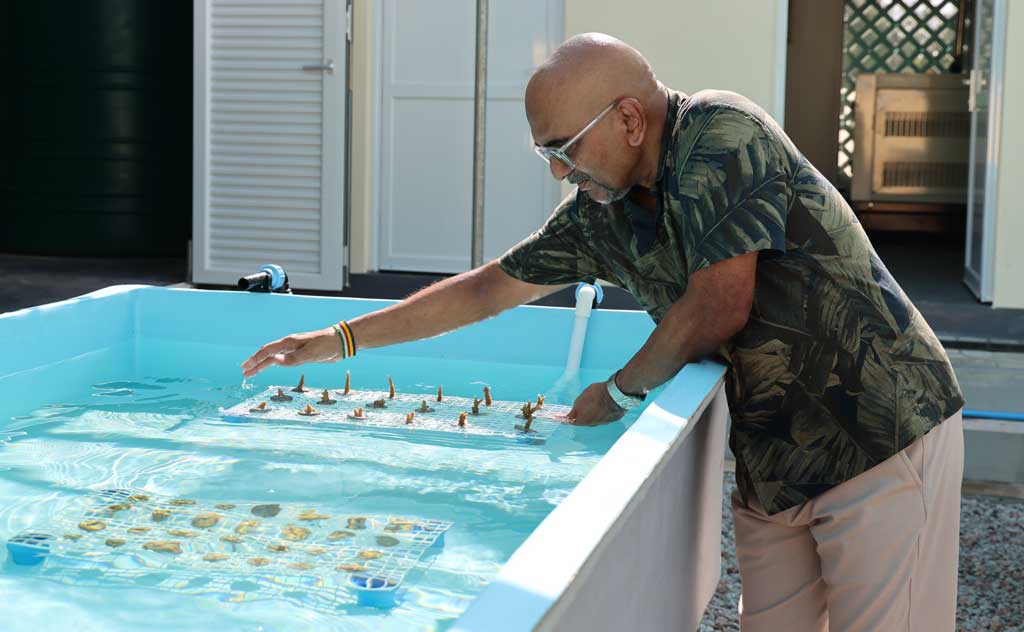
Dr Nirmal Shah symbolically placing corals in tanks at the launch
Innovation has been a game-changer. In 2025, Nature Seychelles launched the Assisted Recovery of Corals (ARC) Facility on Praslin. This pioneering facility grows corals on land using advanced techniques such as micro-fragmentation. Cultivating corals on land offers a novel approach to reef restoration as ocean conditions become more unpredictable. The facility was supported by the Adaptation Fund, Seychelles Conservation and Climate Adaptation Trust (SeyCCAT) and CMA CGM.
Science is at the heart of this project’s efforts. The Reef Rescuers has advanced research into coral spawning and genetic diversity, which is vital for long-term reef resilience.
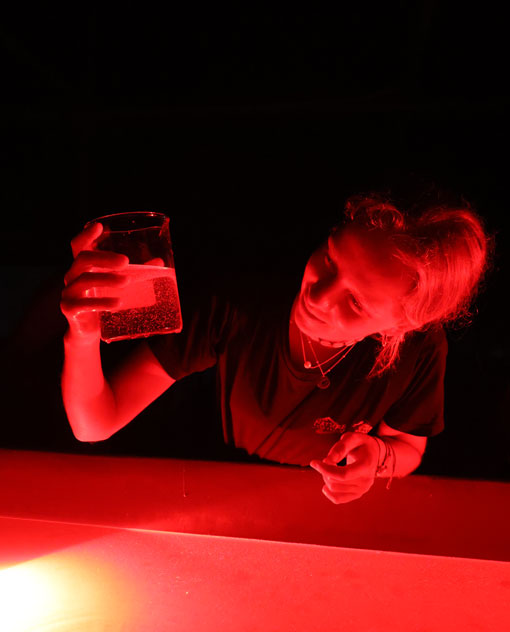
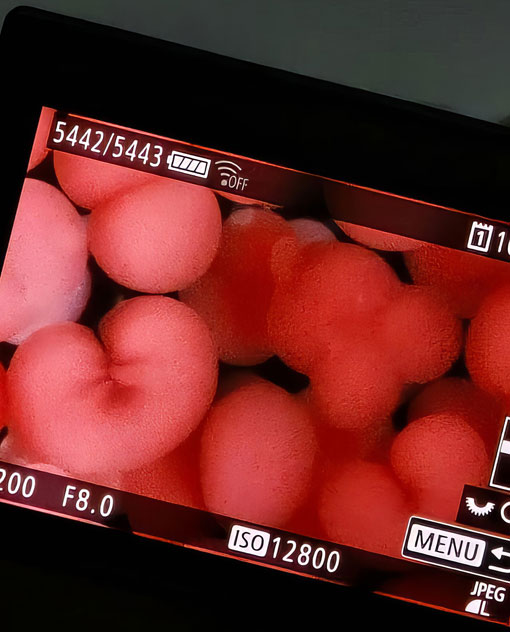
Ex-situ coral spawning
In a ground-breaking first, we teamed up with global experts from Coral Spawning International (CSI), and successfully documented coral spawning in a controlled environment in 2025 for the first time in Seychelles and the region. This milestone was achieved thanks to our new partner, Canon, which invested in the construction of a coral spawning lab at ARC. Canon also provided imaging equipment to improve the observation and documentation of coral spawning, and for education and awareness efforts.
Other partnerships have helped extend the project’s reach beyond conservation circles. Nature Seychelles has collaborated with Raffles Seychelles to train hotel staff in coral restoration efforts. This partnership shows how businesses can help protect the natural environment.
The project has also gained from international academic partnerships, and welcomes volunteers and researchers from universities around the globe. These exchanges enhance coral monitoring and research while fostering a culture of global knowledge sharing, all while staying true to local needs.
Seychelles Maritime Academy at the WIOMSA symposium
In 2025, the Reef Rescuers shared knowledge, lessons learnt, innovations, and future perspectives at the 13 Western Indian Ocean Marine Science Association (WIOMSA) symposium in Kenya. Additionally, in 2025, a micro-fragmentation training for 15 coral reef practitioners from Seychelles, Mauritius, and Rodrigues was held. Later in the year, the Reef Rescuers delivered a hands-on photogrammetry training to participants from Tanzania.
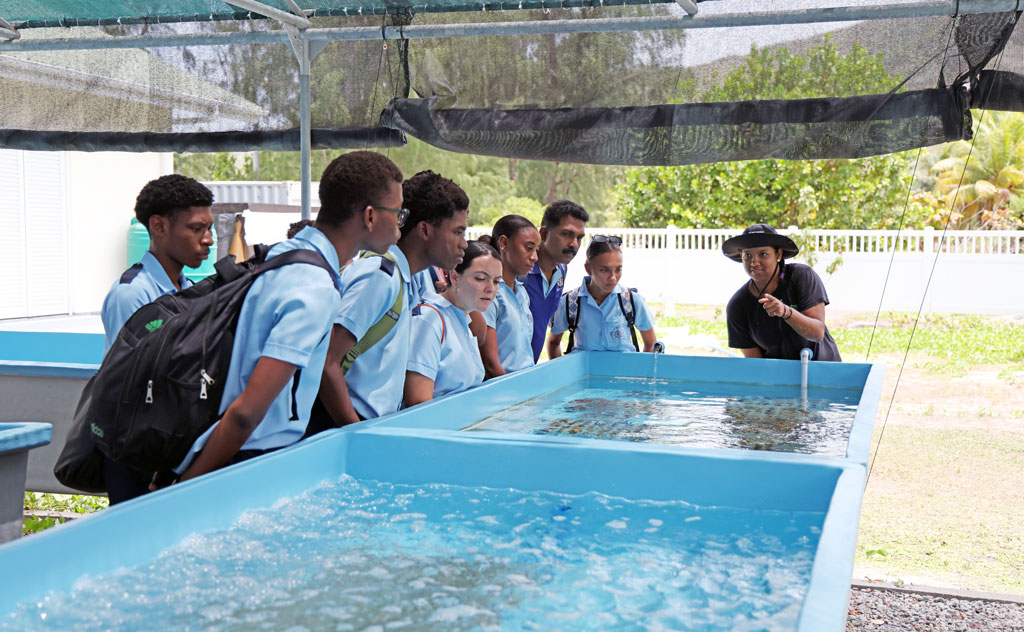
Equally crucial is the focus on engaging Seychellois youth. Through site visits at ARC and mentoring, young people have received a first-hand look at coral science and restoration in action.
In 2025, the Reef Rescuers demonstrated that while the obstacles are significant, so is the potential for collective action to rejuvenate Seychelles’ reefs for the future.