

By Dr. Nirmal Jivan Shah:
The turquoise waters of the Chagos Archipelago have long been the site of dual tragedies: one human, one environmental. Since 2010, the Chagos Marine Protected Area has stood as a global crown jewel of conservation — a near-pristine marine wilderness. Yet critics argue that its creation was inextricably linked to the continued exile of the Chagossian people.
With recent shifts in sovereignty to Mauritius and renewed proposals to allow Chagossians to return and thus engage in subsistence fishing, a fierce debate has resurfaced. Is it possible to safeguard one of the world’s last great marine havens while finally honouring the rights of its Indigenous People and Local Communities (IPLCs)?
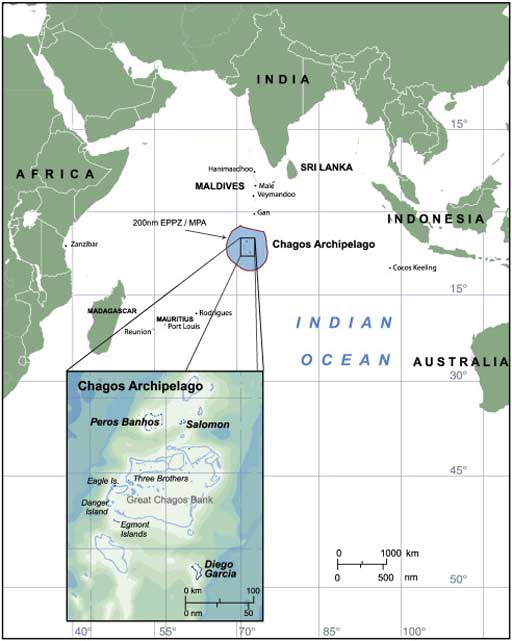
The Demographic Reality
Only a few hundred of the original Chagossians expelled between 1968 and 1973 are likely still alive today, out of the roughly 1,500–2,000 who were removed. Many would now be elderly, and large-scale permanent return by that generation appears unlikely.
However, when descendants — children, grandchildren, and extended family — are included, the global Chagossian diaspora numbers several thousand. The key question is whether significant numbers would seek to resettle in Chagos if permitted.
Map via: Who are the Chagossians? - Chagossian Voices
For the sake of argument, let us assume several hundred people eventually “return”. That scenario would raise practical, ecological, and governance considerations that must be addressed thoughtfully rather than rhetorically.
The Conservationist Concern: A Fragile Oasis
As reported in recent media coverage, many conservationists warn that Chagos represents a rare ecological baseline. Its coral reefs are among the most resilient in the Indian Ocean, and its waters serve as sanctuary for endangered sharks, turtles, and seabirds.
The 2010 designation of the MPA as a strict no-take zone was widely praised by marine scientists as a critical safeguard amid accelerating global ocean decline. The concern today is that opening the waters — even to subsistence fishing — could become the “thin end of the wedge,” gradually eroding protections in an ecosystem that has flourished largely because of minimal human pressure.
There are also legitimate concerns about enforcement capacity in such a remote archipelago. Without adequate monitoring and governance, even limited access could expand beyond its original intent.
Conservation as “Blue Grab”
From the Chagossian perspective, the MPA was never solely about conservation. Leaked diplomatic cables suggested that the reserve would make it “difficult for any former inhabitants to survive on the islands” should they return, a claim that reinforced perceptions of conservation being used as a political instrument.
For Chagossians, fishing is not merely subsistence; it is cultural identity. As IPLCs, their rights to access ancestral lands and waters are recognized under international frameworks. Critics of exclusionary conservation describe the Chagos case as an example of “fortress conservation” — a colonial-era model that separates people from nature rather than recognizing them as stewards.
A False Binary?
The framing of “untouched nature versus human presence” may itself be flawed. Contemporary conservation thinking — reflected in the Convention on Biological Diversity and the Kunming-Montreal Global Biodiversity Framework — increasingly acknowledges that IPLCs often play a critical role in sustaining biodiversity. The real challenge is governance design.
Pathways Toward Balance
1. Co-Management Models
Rather than exclusion, Chagossians could serve as primary custodians of the archipelago. A co-management framework could involve paid roles in reef monitoring, fish stock assessments, biodiversity surveys, and eyes on illegal, unreported, and unregulated (IUU) fishing. Conservation livelihoods — from ecological monitoring to low-impact ecotourism — could anchor a sustainable local economy. It is entirely plausible that among the diaspora are trained biologists, marine scientists, and conservation practitioners.
2. Zoning for Sustainability
The archipelago is vast. Carefully designed zoning could permit tightly regulated subsistence fishing in designated buffer areas near inhabited islands, while maintaining extensive core no-take zones in ecologically sensitive or biodiversity-rich regions.
3. Ban Industrial, Not Subsistence Fishing
Globally, industrial fisheries — not subsistence-level artisanal hand-line fishing — are the primary drivers of marine depletion. A strict prohibition on commercial extraction, combined with limits on gear, catch volume, and species for subsistence use, could minimize ecological impact while restoring cultural rights.
Conclusion
If meaningful resettlement occurs, and if viable livelihoods such as ecotourism or conservation employment can be established, careful planning will be essential to reconcile conservation and community.
The Chagos Archipelago should neither function as a human-free museum nor be opened to commercial exploitation. A future that integrates Chagossians into conservation governance offers a path beyond exclusion. We need not choose between people and biodiversity. In the long term, durable conservation depends not on absence of people, but on stewardship grounded in rights, responsibility, and respect.
MY HISTORY WITH THE CHAGOS
| The history of the Chagos Archipelago is often told through the lens of geopolitics, human displacement and conservation, but beneath these global narratives lies another story of commerce, logistics, and human livelihoods. During the mid-20th century, particularly as management of the Chagos plantations shifted from Mauritius to Seychelles, the archipelago’s existence relied on a fragile yet robust maritime bridge. At the heart of this logistical feat was Jivan Jetha and Co., my family’s enterprise that served as the artery connecting the remote plantations of Chagos to the rest of the world.
In the 1960s, the management of the Chagos coconut plantations underwent a significant transition. Under the leadership of Paul Moulinié, the Chagos Agalega Company moved its operational hub to Victoria, Mahé. This shift transformed the Seychelles into the primary administrative and logistical center for the islands. However, a management company is only as effective as its supply chain. Jivan Jetha and Co. stepped into this role, providing the essential services required. The partnership between Jivan Jetha and Co., Moulinié and Co and the plantation management was built on three essential pillars: Sustaining the Population (The Supply Chain): The Chagos islands were not self-sufficient for the needs of a modern plantation workforce. Jivan Jetha and Co. managed the task of provisioning the settlements with essential goods. This included staple foods, medical supplies, and the fuel necessary to power plantation machinery. Without this consistent “lifeline,” the community of workers and their families would have found life in the outer islands unsustainable. The Copra Economy (Export and Trade): The economic engine of Chagos was the coconut. Jivan Jetha and Co. acted as the primary agent for the export of copra, which was the archipelago’s “white gold.” By trading in local produce—including copra the company integrated the remote islands into the global market. They didn’t just deliver goods; they ensured the products of Chaggosian labor reached international buyers, providing the revenue that kept the plantations solvent. The Maritime Link (Shipping Agency): Operating out of Victoria, the company functioned as a shipping agency (which it already was being the agent for several shipping lines). This involved coordination with vessels, such as the Nordvaer, to transport cargo. During the 1960s, the Chagos islands were entirely dependent on the regular arrival of ships from the Seychelles. The role played by Jivan Jetha and Co. was therefore more than just a business arrangement; it was a fundamental component of the islands’ socio-economic fabric. Today, this history serves as a reminder of the deep, historical ties between the Seychelles and the Chagossians, a connection forged through the daily necessities of trade, travel, and the shared challenge of life in what was then a still remote part of the Indian Ocean. |
Top image used solely for representation and is not a photo of the Chagos Archipelago