
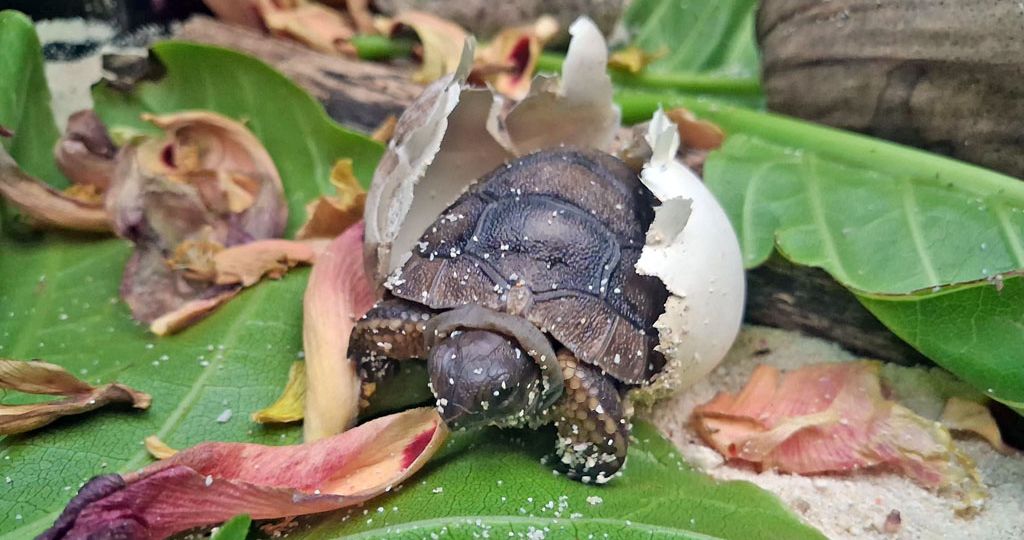
Another batch of Aldabra giant tortoise hatchlings has emerged from a controlled hatchery on Cousin Island Special Reserve, where Nature Seychelles is investigating ways to improve hatching success among the island’s tortoise population.
The Special Reserve’s Science Officer, Chris Tagg, continues to collect nests to study hatching rates, with the first of the nests collected this year hatching over the weekend (31 October – 1 November 2026). 11 of the nest’s 16 eggs hatched, with two or three more expected to still hatch.
The latest hatching is part of an ongoing study into what may be affecting egg development and hatching success on Cousin Island.
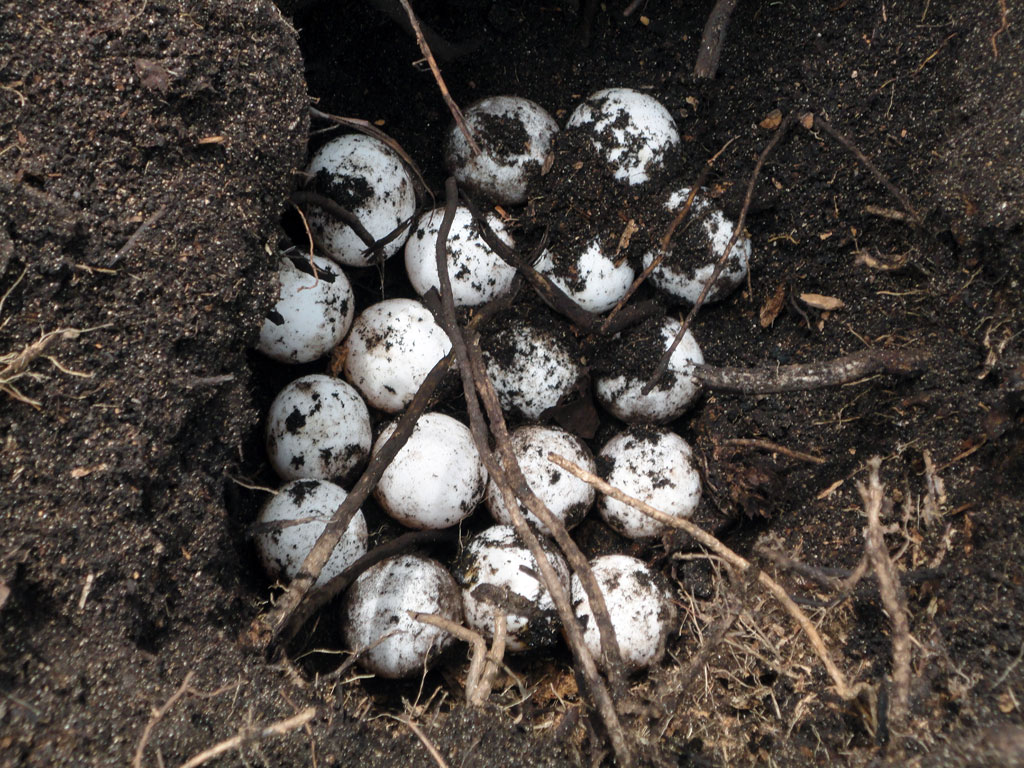
Tortoise eggs in a wild nest
Over the past few years, Nature Seychelles has monitored more than 15 giant tortoise nests, with only one nest hatching successfully in the wild. This prompted the conservation team to look into why so many eggs failed to develop fully.
Working with Seychelloise scientist Alessia Lavigne, the team found that some eggs from unsuccessful nests had been fertilised and showed signs of early embryonic development. But development had stopped before the eggs could hatch.
To further investigate, Nature Seychelles began collecting eggs from selected nests and monitoring them under different conditions in a controlled hatchery.
This latest batch is part of this ongoing trial, adding to the data gathered so far.
Three nests have been included in the investigation. Two have failed thus far, while one contained an egg that showed very early development before it, too, failed.
For the latest trial, the team placed the eggs at a shallower depth in the sand to see whether it would improve hatching. While research is still ongoing, the new hatchlings offer another encouraging sign.
Monitoring every tiny step
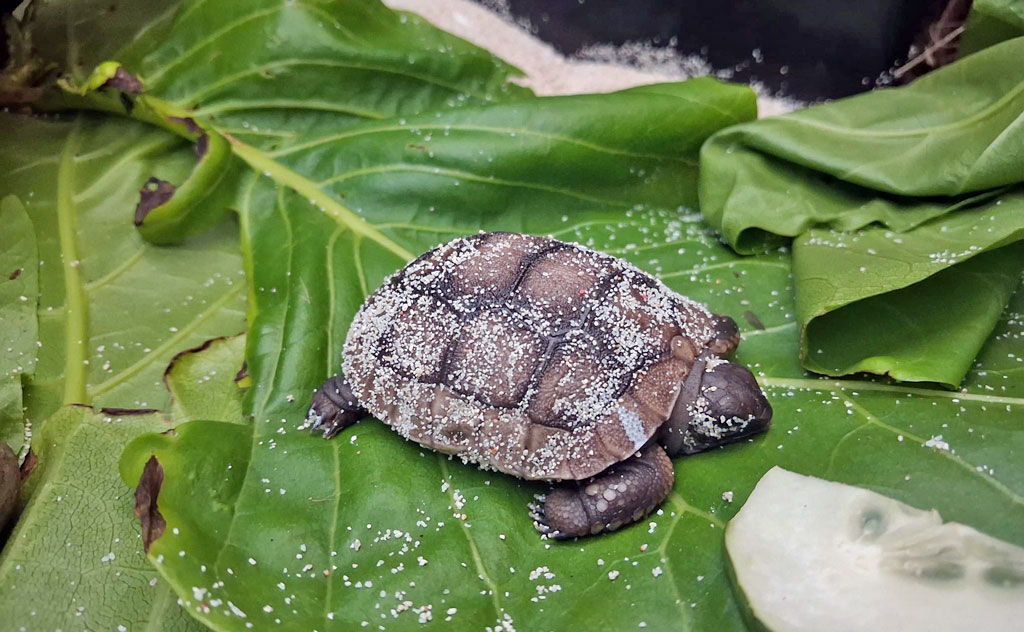
The hatchlings are given fresh water and vegetation
The hatchlings are being cared for at the island’s field centre, where they’re weighed and measured each day. This helps the team track how they grow over time.
With guidance from Tagg, Nature Seychelles’ volunteers are helping care for the young tortoises and following instructions on feeding, hygiene, and daily observation. Good care is especially important at this early stage. The hatchlings are given fresh water and vegetation, including hibiscus, morning glory, and young leaves. They’re handled as little as possible while their shells are still soft and developing.
Preparing for life on Cousin Island
In time, the hatchlings will join the island’s free-roaming giant tortoise population. First, though, they need to reach an important stage in their development.
The plastron – the underside of the shell – isn’t completely sealed. The hatchlings need time for it to close completely before they can be released.
Conditions on the island are quite favourable for a release, however, unlike in the previous controlled hatching last where they were held for longer due to the drought. Recent rains have helped vegetation recover, giving the young tortoises plenty of natural food and water as they prepare for life beyond the hatchery.
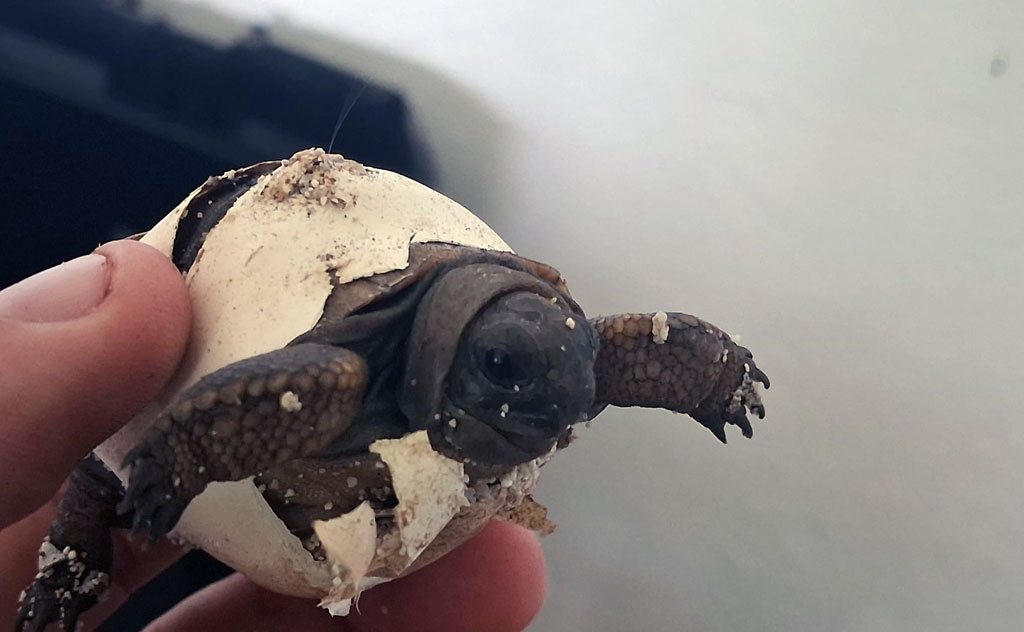
The reasons for the island’s low hatching success aren’t yet fully understood
For Nature Seychelles, every successful hatch offers another chance to learn. Continued monitoring and experimentation are helping the conservation team learn more about the conditions giant tortoise eggs need to develop successfully.