
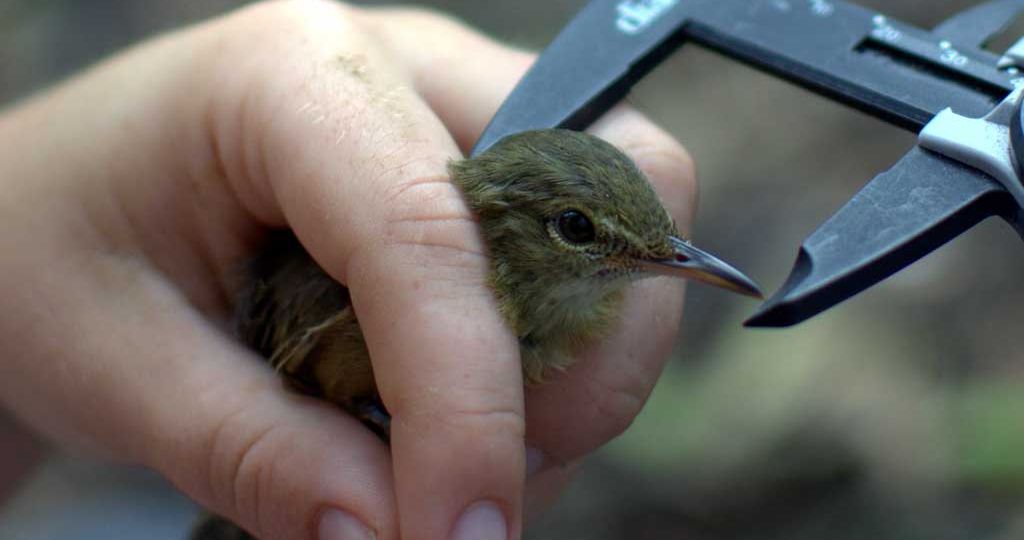
On Cousin Island Special Reserve in the Seychelles, one of the most iconic birds in the world of conservation is reshaping how we think about health, society, and even ourselves.
The Seychelles Warbler has been the subject of long-term studies for about 40 years. It is the most researched species in Seychelles, possibly in the region. About 200 papers have been published on it. It has become one of the most important model organisms in evolutionary biology and ecology.
A new paper on the Warbler has revealed something profound: who you live with doesn’t just shape your behaviour it shapes your biology.
Scientists of the Seychelles Warbler Group, who cooperate closely with Nature Seychelles, have found that Warblers sharing nests and close social bonds also share their gut microbiomes. The closer the relationship, the more similar their internal microbial worlds become.
This is not about diet or environment alone. The key driver is social intimacy. These microbes, especially anaerobic bacteria critical for digestion and immunity, can only pass through direct, close contact.
And here is the wider implication: what holds for a cooperative breeding bird on a small island likely extends to humans. Our households, our partners, even our daily proximity to others may be quietly reshaping our internal ecosystems.
This paper, and many others before it, elevates Cousin Island from a conservation success story to a living laboratory. Decades of intensive research into the Warbler on Cousin Island have yielded profound insights that are highly relevant to human beings, particularly in the fields of health, aging, sociology, and conservation.
The Seychelles Warbler is considered to be the first species to have been saved from extinction to now a stable population exclusively through targeted conservation action. It is the only species where an entire island – Cousin Island- was purchased to save it.
As humans face a global biodiversity crisis, the case of the Seychelles Warbler provides a blueprint for how we can successfully intervene to reverse the damage done to ecosystems, preserve biodiversity, and manage small populations. It also reminds us that intact ecosystems do more than preserve species: they generate insights into the fundamental rules of life.
‘Social structure and interactions differentially shape aerotolerant and anaerobic gut microbiomes in a cooperative breeding species’ is published in the journal Molecular Ecology.
Top photo: The Seychelles warbler is at the cutting edge of science (Credit: Arne van Eerden)