
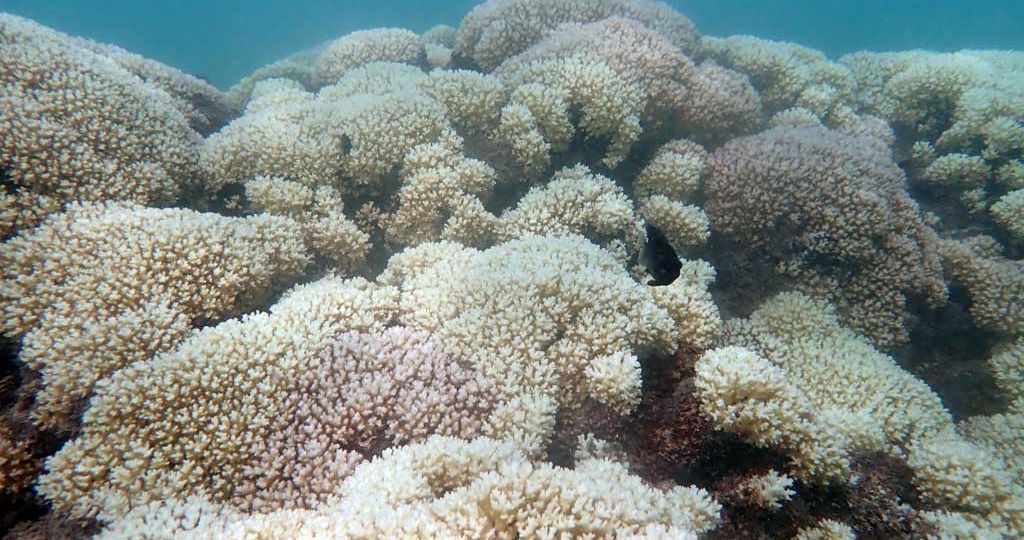
November is Coral Bleaching Awareness Month. Around the world, organisations and individuals are changing their logos to white and sharing images of bleached reefs to draw attention to a heart-breaking reality beneath the waves: coral bleaching.
Nature Seychelles is proud to join this worldwide effort, temporarily changing its green and blue logo on social media to a bleached version in support of the yearly campaign organised by the International Coral Reef Initiative (ICRI) and the Coral Reef Alliance. This campaign invites everyone – from ocean enthusiasts to decision-makers – to recognise, appreciate, and take action for coral reefs before their colours, and their very existence, fade away.
Why coral reefs matter?
Coral reefs are some of the most diverse and precious ecosystems on our planet. They are home to a quarter of all marine species, but cover just one per cent of the ocean floor. Reefs provide food, livelihoods, and coastal protection for millions of people worldwide. For small island nations like Seychelles, they serve as crucial natural barriers against erosion and storm surges, and are essential for our tourism and fisheries.
However, these underwater rainforests are facing serious threats. Rising ocean temperatures, driven by climate change, are causing widespread coral bleaching – a crisis that could lead to the extinction of corals and significantly impact ocean biodiversity.
What is coral bleaching?
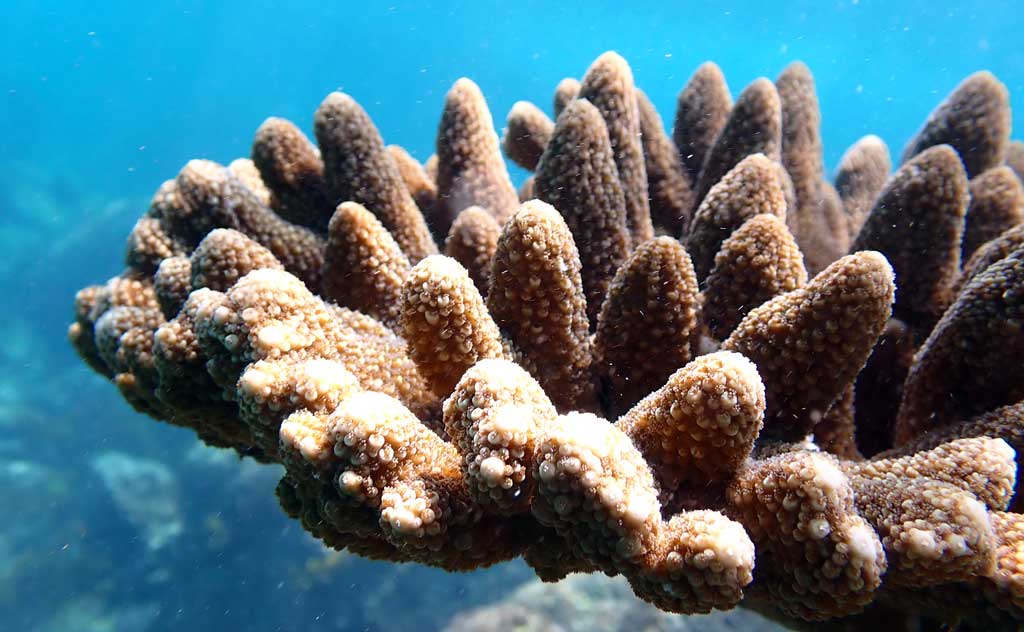
Corals thrive in a symbiotic relationship with tiny algae known as zooxanthellae, which give them their vibrant colours and supply the nutrition they need to flourish. When ocean temperatures rise – or when affected by other threats such as pollution – corals become stressed and expel the algae, resulting in a stark white appearance, a process known as coral bleaching.
Bleached corals are not dead; however, when threats persist, they become susceptible to disease and can die. When reefs die, the entire ecosystem and the livelihoods they support are also affected.
Building hope through restoration and innovation
For over fifteen years, Nature Seychelles has been on a mission to revive coral reefs with its Reef Rescuers project on Cousin Island Special Reserve. The current phase of this project is funded by the Adaptation Fund through UNDP and the Government of Seychelles. By employing techniques like coral gardening, the project has successfully nurtured and outplanted thousands of coral fragments onto damaged reefs, breathing life back into these underwater ecosystems.
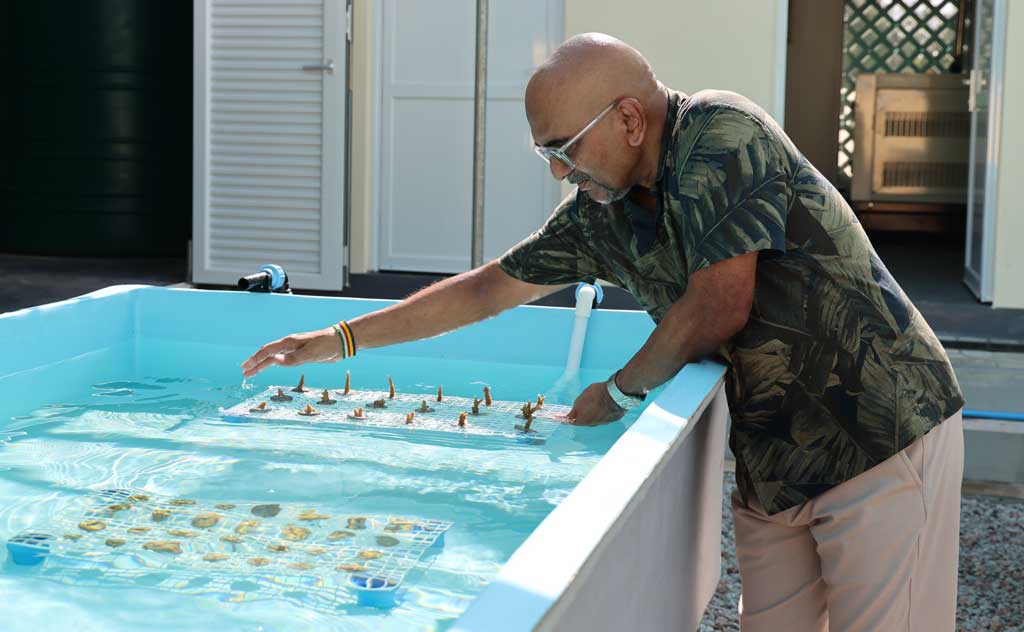
To bolster these efforts, Nature Seychelles built the country’s first land-based coral aquaculture facility – the Assisted Recovery of Corals (ARC), financially supported by the Adaptation Fund, CMA-CGM and SeyCCAT. This cutting-edge facility is dedicated to cultivating and studying corals in a controlled environment. Here, methods like micro-fragmentation speed up coral growth, while research helps to understand stressors.
In addition to these efforts, a coral spawning lab, created in collaboration with Canon and Coral Spawning International, will introduce coral reproduction, mimicking natural spawning events in a lab setting. These innovative facilities represent a new era in coral restoration, blending science and research, technology, and conservation to protect coral reefs in a warming world.
Why an awareness month?
Coral Bleaching Awareness Month is more than just a symbolic gesture; it’s a rallying cry. By spreading knowledge and igniting discussions, it fosters a global understanding of what’s happening and encourages collaboration among communities, scientists, and governments. It is a reminder that saving coral reefs demands both global change and local change; from cutting down the greenhouse gas emissions that are causing climate change to managing ocean pollution and restoring damaged reefs.
What can you do?
Join campaigns to demand climate action, support their conservation and rehabilitation, reduce your carbon footprint, choose reef-safe products, do not pollute or damage corals, and encourage others to do the same. Coral reefs are worth fighting for, because life is better in colour.