Photography plays a key role in how we capture and share the beauty of the natural world. On Cousin Island Special Reserve, images help us record wildlife and their behaviour, document conservation work, and share the island’s extraordinary biodiversity with people far beyond its shores.
In our education and outreach initiatives, photographs breathe life into science and conservation, making them more relatable and engaging.
Through social media and other communication channels, a single snapshot can introduce thousands to a species, an ecosystem, or a conservation issue they might never have encountered otherwise.
Photography also serves as a powerful tool for illustrating change.
It allows conservationists to look back, compare, and tell the story of what has changed. At Cousin Island, decades of photographs have chronicled the journey of a coconut plantation transforming into a flourishing nature reserve. Today, we continue to capture the island’s wildlife, stunning landscapes, and the dedicated individuals working tirelessly to protect them.
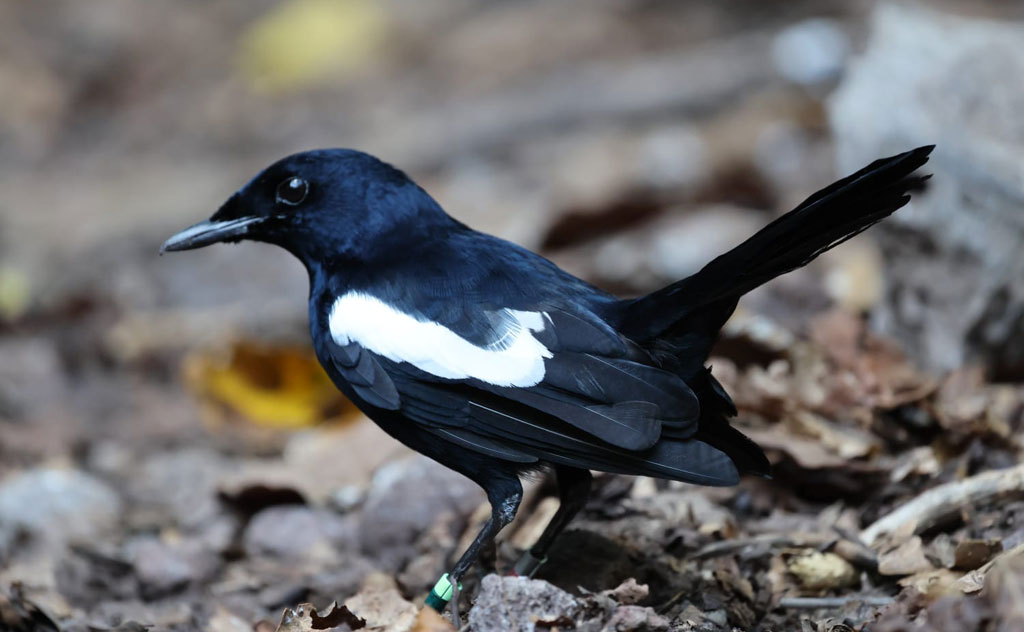
Photographs have chronicled Cousin's journey from a coconut plantation into a flourishing nature reserve
This is why our partnership with Canon EMEA is so exciting.
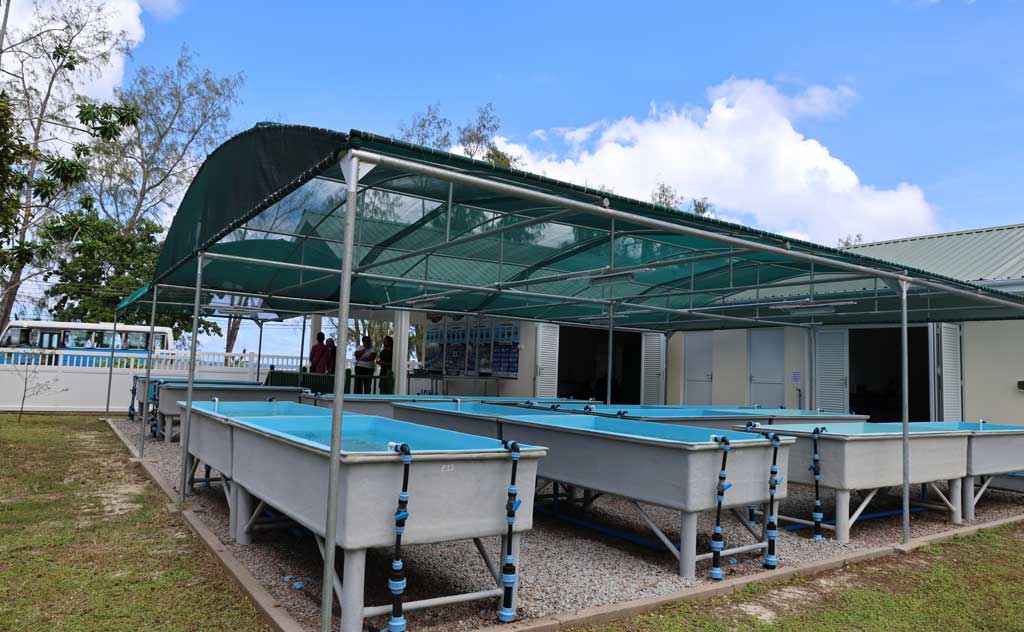
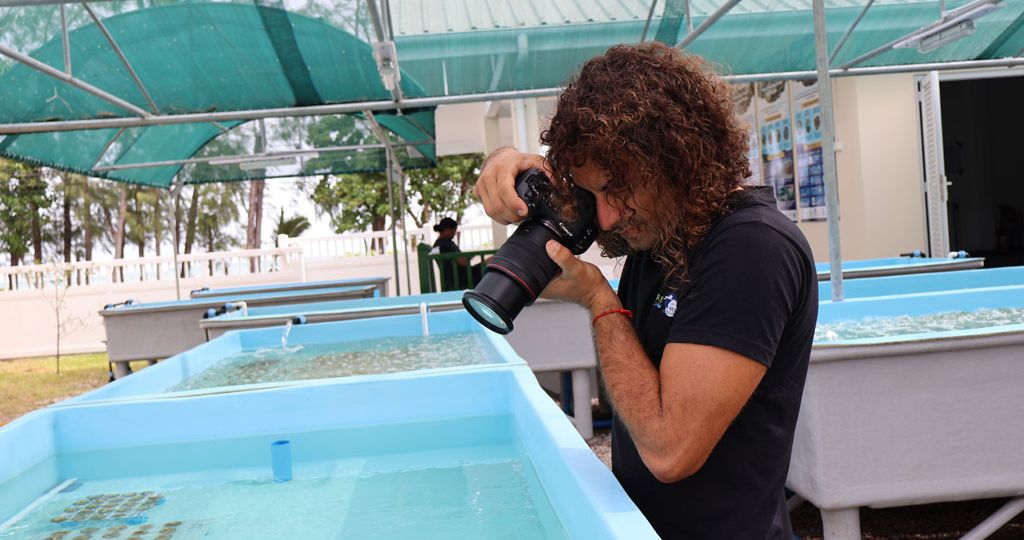
Along with their investment in a coral breeding lab at our Assisted Recovery of Corals (ARC) Facility on Praslin Island, Canon has equipped us with imaging tools that enhance our ability to observe and document coral spawning. This support also bolsters our citizen science efforts, education, and awareness campaigns.
As a result, our Reef Rescuers can now capture the intricate details of coral spawning, contributing valuable insights to research, education, and conservation communication.
Coral reefs are facing immense challenges due to climate change, especially with frequent bleaching events. For over 15 years, Nature Seychelles has been restoring reefs around Cousin Island, starting with coral gardening techniques in underwater nurseries and later expanding into land-based coral aquaculture through the ARC facility.
But growing corals through asexual reproduction is not the whole picture. Sexual reproduction, particularly through coral spawning, plays a crucial role in introducing genetic diversity, which is vital for creating resilient coral reefs. This is why establishing a coral spawning lab was such a significant milestone for the Reef Rescuers programme.
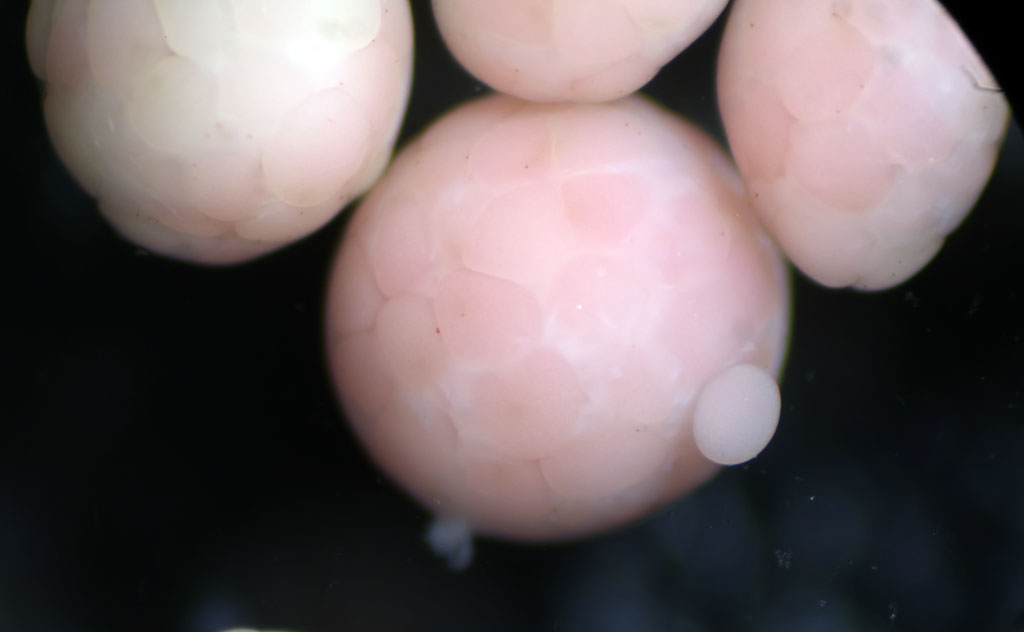
Documentig coral spawning in a controlled, land-based environment thanks to Canon
Thanks to support from Canon and the expertise of Coral Spawning International (CSI), Nature Seychelles documented coral spawning in a controlled, land-based environment for the first time in Seychelles and the region.
Canon’s imaging technology allowed our team to closely observe and record the spawning process, which is essential for understanding reproductive timing, post-settlement growth, and survival rates. The imaging technology also supports photomicrography, photogrammetry, and high-quality imagery and video, all of which are invaluable for research and communication.
A photograph or video of coral spawning can help a student grasp how corals reproduce, inform a potential partner about what reef restoration involves, allow a policymaker to visualise the ecosystems at risk, and make someone scrolling through their social media realise that corals are living creatures with fascinating reproductive lives.
That connection is important. People are more likely to care about what they can see, understand, and connect to.
Technology with a purpose
The partnership with Canon is also about a bigger vision for conservation: harnessing technology to enhance our efforts.
The ARC facility embodies this philosophy. It brings together land-based coral aquaculture, micro-fragmentation, research, training, and now, the exciting addition of sexual coral reproduction through the spawning laboratory.