
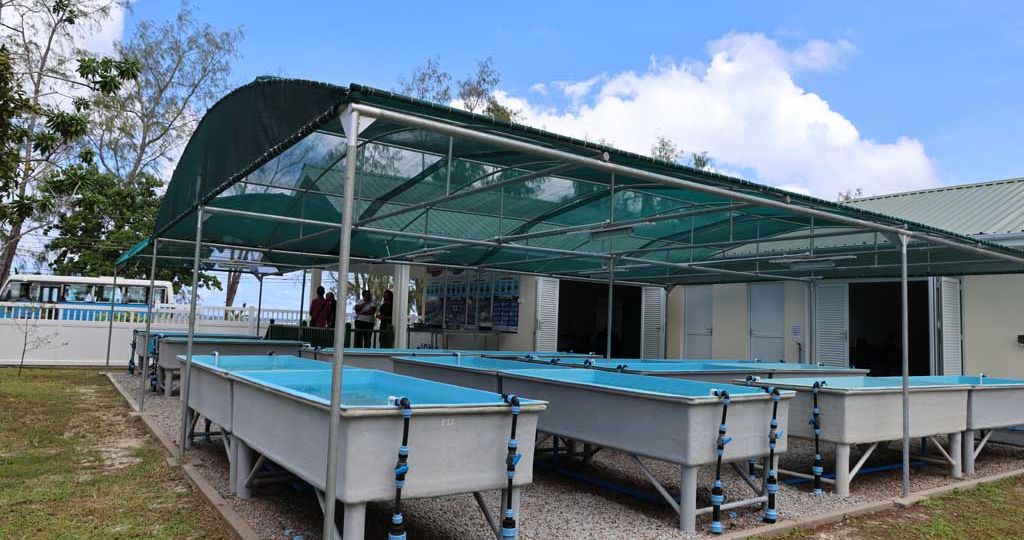
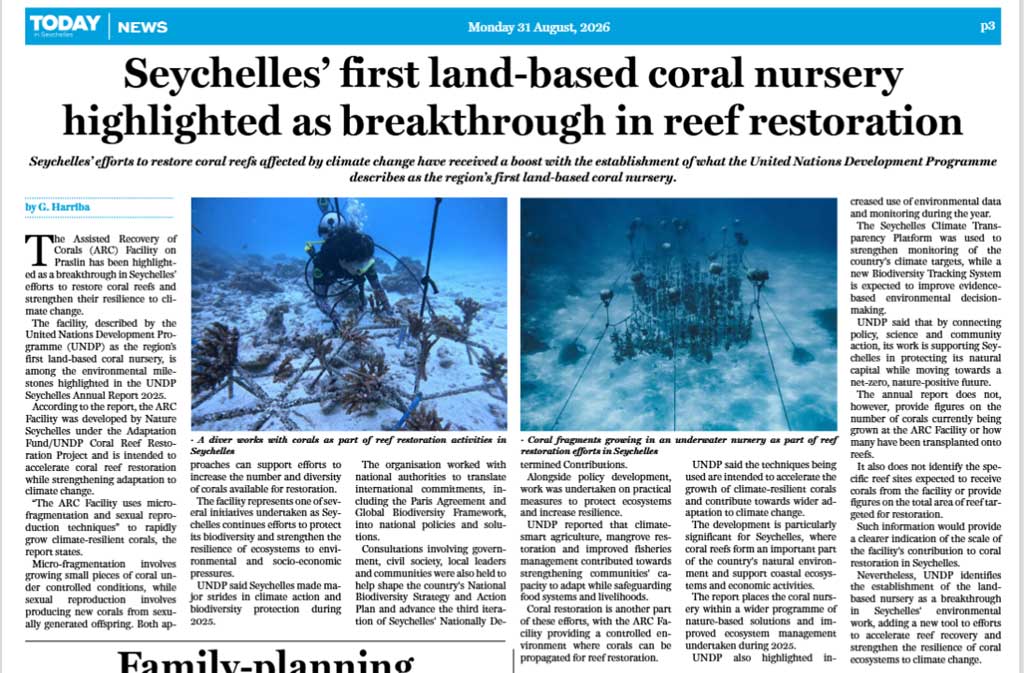
UNDP has hailed the Assisted Recovery of Corals (ARC) facility on Praslin, Seychelles’ second most populous island, as a breakthrough for coral reef restoration.
The only facility of its kind in Africa, ARC also demonstrates what can happen when funding, ambition and leadership are combined to scale a project beyond its original scope and create a national legacy asset.
The facility was established under the regional coral reef restoration project covering Seychelles and Mauritius, funded by the Adaptation Fund through UNDP and the respective governments. Nature Seychelles used its component of the project as a springboard to leverage additional investment from several sources, including SeyCCAT, CMA CGM and Canon, while bringing in specialist technical expertise from Coral Spawning International and others.
The result is a world-class centre for coral breeding, restoration, training and research, with a value extending well beyond the life of the original project.
That potential is already being recognised. The draft Seychelles Marine Biotechnology Investment Plan identifies the facility as supporting one of five potential biotechnology business lines for the country. The Plan identifies coral biotechnology as one of Seychelles’ strongest and most immediately investable, non-extractive marine assets. It argues that the real commercial potential of the ARC facility lies less in providing high-value restoration services, specialist training and certification, methodology and technology transfer, monitoring and verification to governments, MPAs, developers and conservation programmes across the Western Indian Ocean
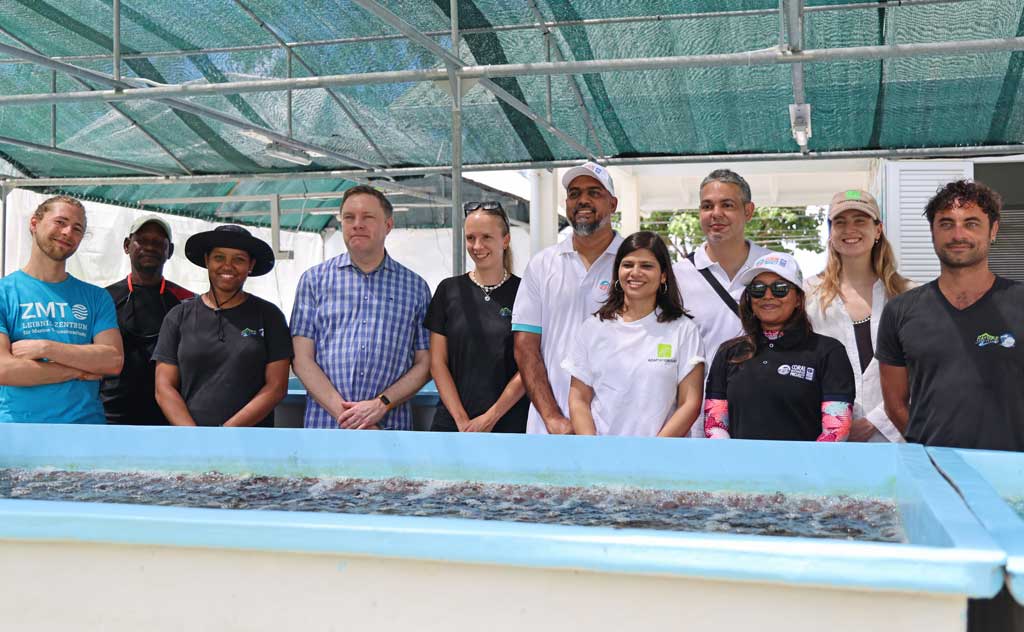
Adaptation Fund - UNDP Mission at ARC
ARC could, with targeted funding, evolve into a national coral bank, safeguarding rare, threatened and climate-resilient coral genotypes for future restoration and research. This is increasingly important as marine heatwaves and repeated bleaching events can eliminate locally important coral colonies before their genetic diversity has been secured. Maintaining living collections of resilient corals would give Seychelles a biological insurance policy, providing broodstock for future restoration, selective propagation and research as reef conditions continue to change.
There is another exciting opportunity. As climate change increasingly batters our coasts, the Blue Barrier is an adaptation concept whose time has come. By designing underwater coastal protection structures to receive corals and other marine organisms, we can move beyond conventional grey infrastructure towards living barriers that combine coastal protection with habitat creation and reef restoration. The ARC facility can produce hundreds of coral colonies to help establish and populate these living walls.
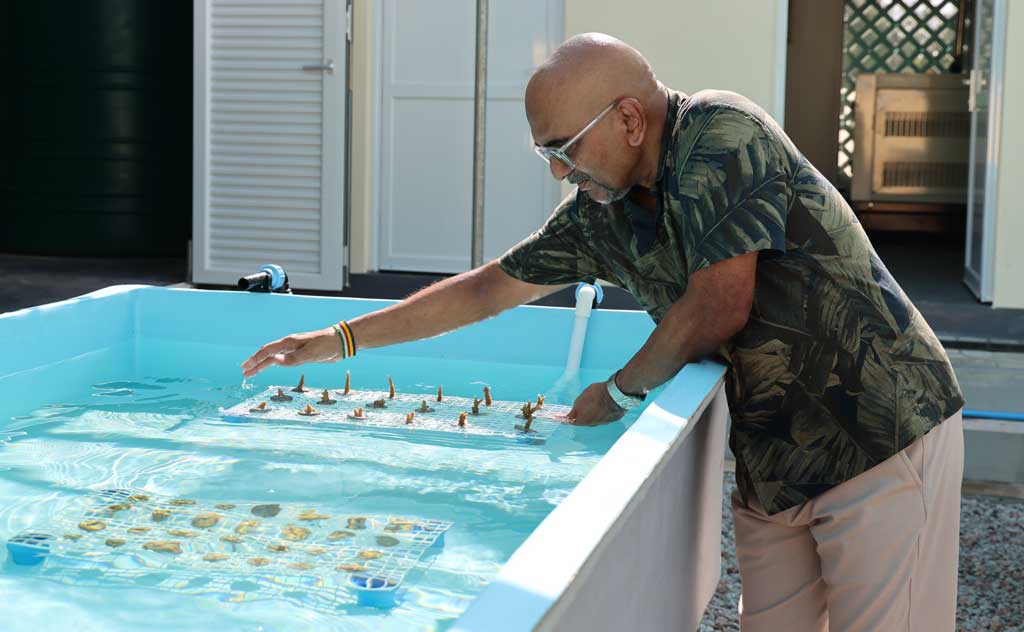
Dr Shah placing fragmented corals in a tank during the launch of the facility
The ARC facility would allow Seychelles to push coral restoration beyond conservation alone and demonstrate how ecological restoration, biotechnology and climate adaptation can be brought together in a single practical solution — another area in which a small island state can provide global innovation and leadership.
The infrastructure, expertise and proof of concept are now in place. The challenge is to secure the investment needed to ensure that ARC continues to grow as a national asset and becomes a platform for the next generation of Seychelles-led solutions to climate change.
Dr Nirmal Shah, Nature Seychelles’ Chief Executive