
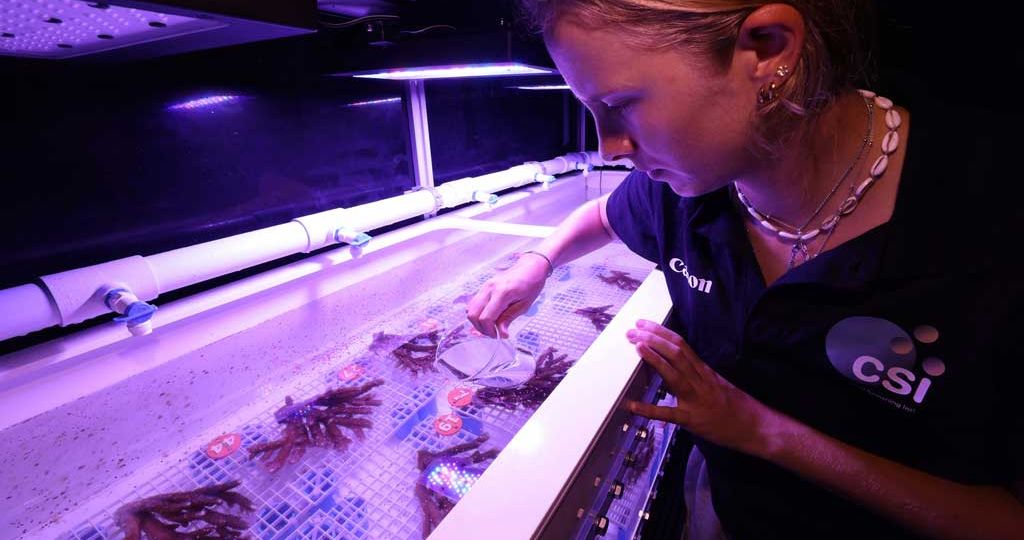
Coral reefs are being heavily degraded by climate impacts. Experts have called for urgent solutions to save corals. Rising to this challenge, Nature Seychelles, Coral Spawning International (CSI) and Tropical Marine Centre held a Canon-funded Innovations Lab at the Assisted Recovery of Corals (ARC) Facility on Praslin from 22 October to 3 November 2026. Building on a 2025 partnership, the programme combined land-based coral spawning, field restoration, and imaging at ARC. It included controlled spawning trials, advanced reef monitoring training, and technical checks of the facility’s systems.
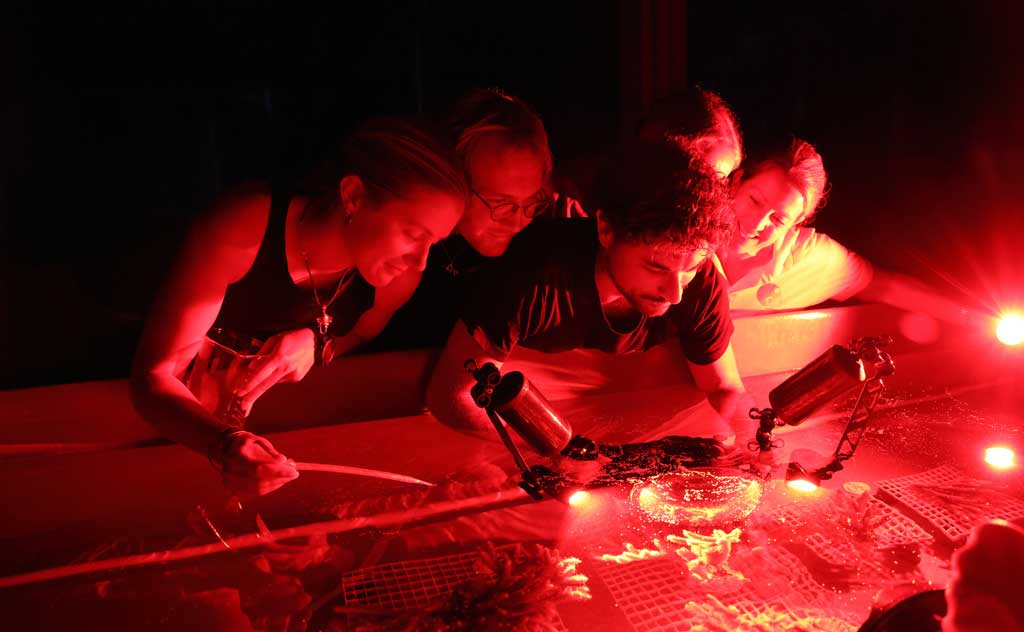
Nature Seychelles, CSI, and Tropical Marine Centre held a Canon-funded Innovations Lab at the ARC Facility on Praslin (Photo: CSI)
“An innovation lab gives people from different disciplines the space and resources to challenge established ways of working and put bold ideas to the test. An insight from one field can spark an experiment in another, and a discovery can lead to a new method or further discoveries,” said Dr Nirmal Jivan Shah, Nature Seychelles’ CEO.
CSI’s Dr Jamie Craggs and Kate Craggs worked with Nature Seychelles’ Reef Rescuers Dr Luca Saponari, Viktoria Sturm, and Akash Paunikar, and scientific interns Oliver Klompe and Victoria Aase-Bjorka. Nature Seychelles’ Communications Manager, Liz Mwambui and Dr Shah joined some sessions.
Breaking barriers in coral reproduction
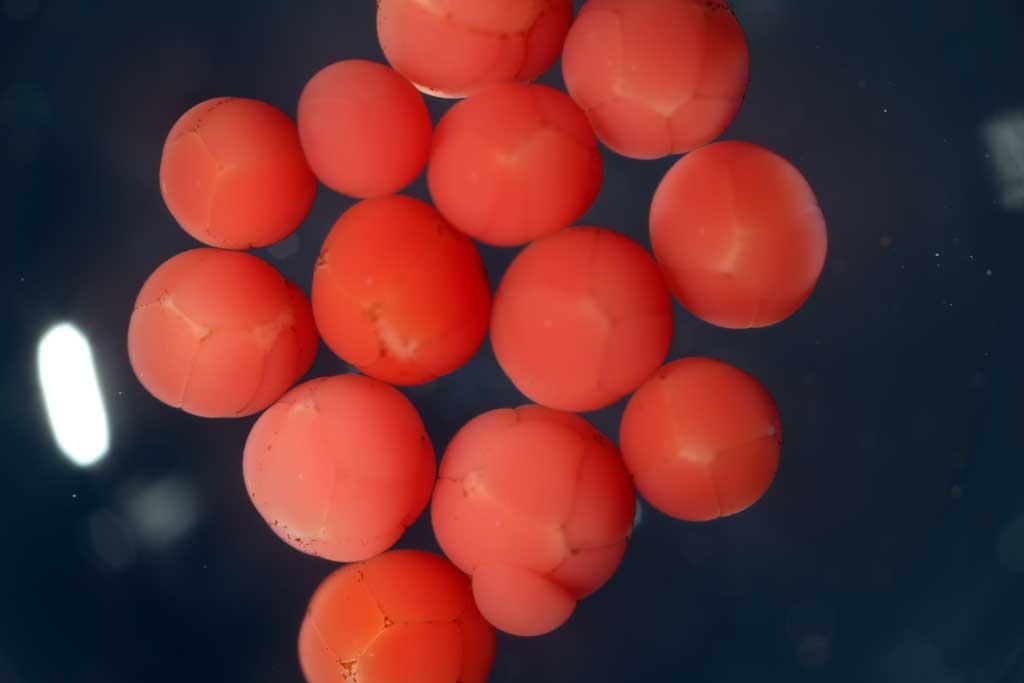
Eighteen colonies of three coral species (Acropora abrotanoides, Acropora stigmataria and Acropora aff. tenuis) spawned at ARC over six nights. “The team recorded a 90% fertilisation rate and estimated more than a million embryos. Larvae developed and settled in the tanks, forming young corals,” said Dr Saponari.
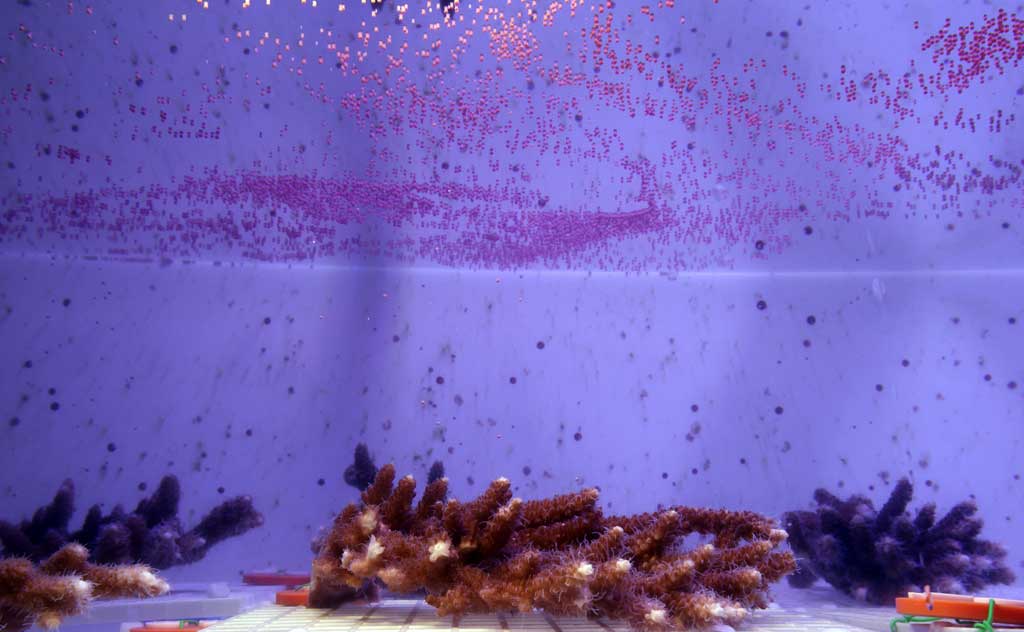
Eighteen colonies of three coral species (Acropora abrotanoides, Acropora stigmataria and Acropora aff. tenuis) spawned at ARC over six nights (Photo: CSI)
ARC recorded its first successful spawning in November 2025, followed by another in February 2026. Acropora aff. tenuis colonies that spawned in 2025 stayed healthy in tanks for a year and spawned again in step with wild colonies. “It shows that Nature Seychelles can successfully maintain healthy, reproductive broodstock from one spawning season to the next,” said Dr Craggs.
CSI’s phase-shifting technology enabled corals to spawn in mid-afternoon at ARC’s spawning lab, the only one of its kind in Africa and the Western Indian Ocean. Colonies in outdoor tanks spawned after dark as usual. Many reef-building corals release eggs and sperm together on just a few nights a year. By adjusting cues from daylight, moonlight and seasonal temperatures in the lab, the team shifted both the time of day and the season of spawning, creating more opportunities to collect eggs and sperm for breeding and restoration.
Discovering hidden coral diversity in reef rubble
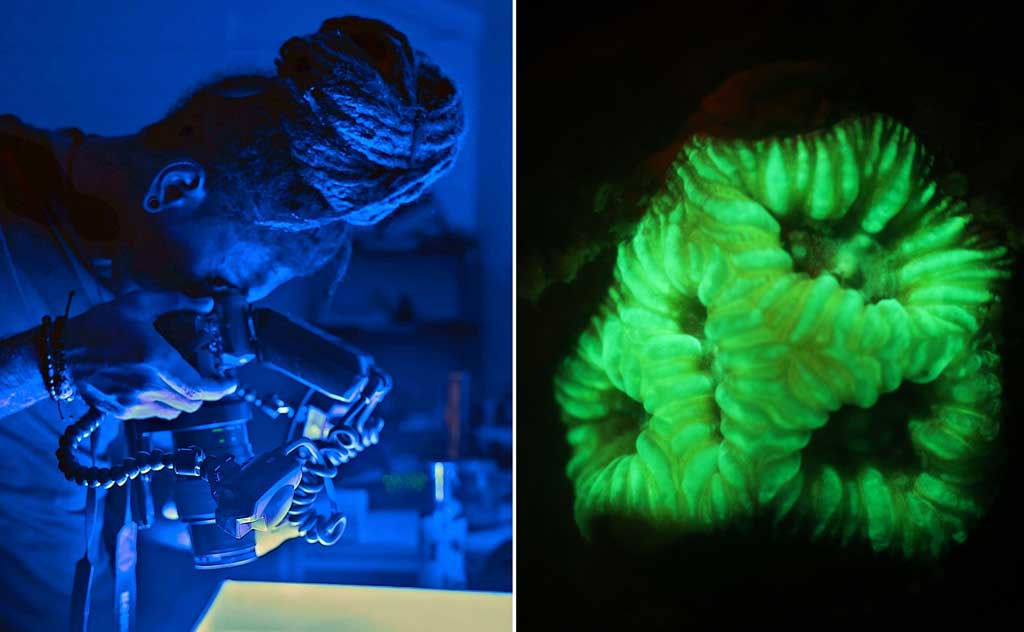
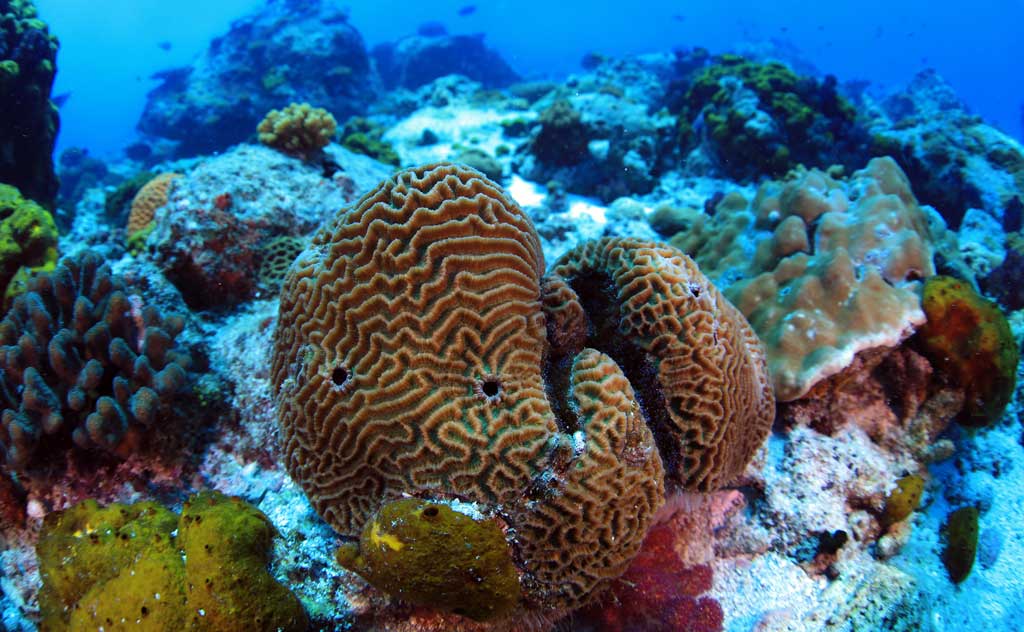
Corals growing on rubble revealed by fluorescence photography (Photo - Nature Seychelles)
Fluorescence photography revealed young corals on rubble, the loose fragments of dead coral skeleton that make poor foundations for planting corals. The team is studying whether it can identify, collect and raise these naturally settled corals at ARC for restoration. This could help conserve a wider range of species and genetic diversity that might otherwise be lost as rubble shifts across the reef.
Advancing active reef restoration techniques
In field trials, the team planted young corals raised from ARC’s 2025 spawning in Cousin Island Special Reserve, where it will monitor their early survival. Most juveniles will stay at ARC because a strong El Niño forecast for the next 12 months could affect Indian Ocean reefs.
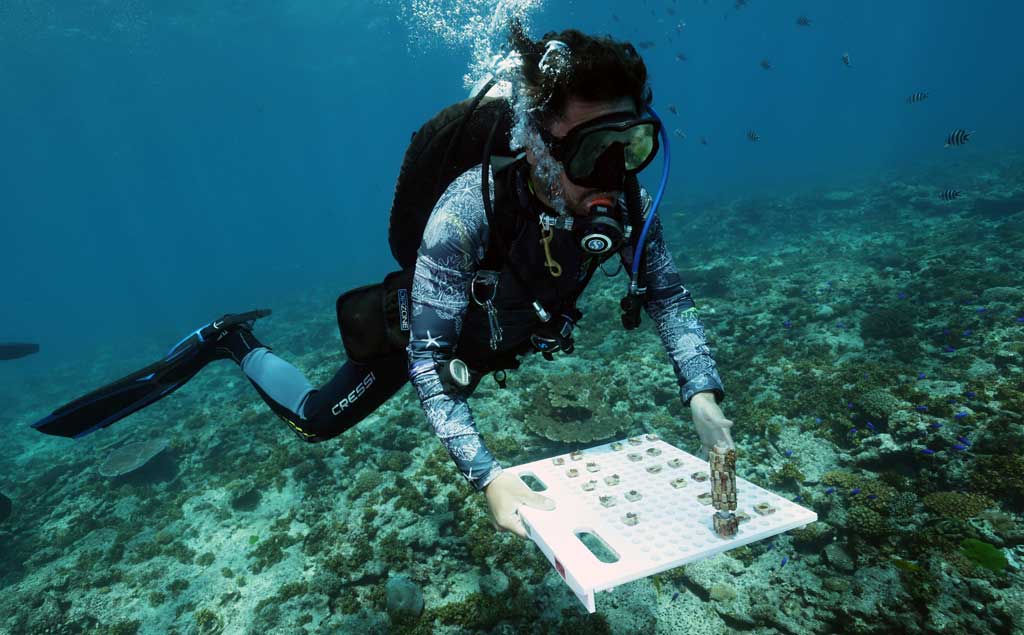
Outplanting ARC-grown corals from the 2025 spawning (Photo: CSI)
The team used targeted microfragmentation to separate individual young Acropora secale corals. The technique can yield more colonies for restoration, and Nature Seychelles has trained local and regional specialists to use it.
Enhanced imaging technology
With support from Canon, Nature Seychelles’ official Imaging Partner, the team used underwater photogrammetry and fluorescence imaging to document six plots in Cousin Island Special Reserve. Nature Seychelles had directly seeded the plots in 2025 with larvae from ARC.
Photogrammetry combines hundreds of overlapping photos taken from different angles into scaled 3D models. Repeat surveys help track coral growth and survival. The team will assemble the latest images into detailed, measurable maps called orthomosaics.
The team also photographed large Porites corals for the global Map the Giants project and trained in TagLab, image analysis software introduced in Seychelles for the first time, to measure the size and growth of young corals.
Imaging was a core activity giving scientists new ways to understand, document and ultimately support restoration (Photo: Nature Seychelles)
“No single organisation can address the challenges facing coral reefs alone. Imaging has the power to reveal what would otherwise go unseen, giving scientists new ways to understand, document and ultimately support the restoration of these vital ecosystems. By bringing Canon’s technology together with the scientific expertise of Coral Spawning International and the local conservation leadership of Nature Seychelles, this partnership shows what collaboration can achieve,” said Peter Bragg, Sustainability and Government Affairs Director at Canon EMEA.
Strengthening international partnerships for technology transfer.
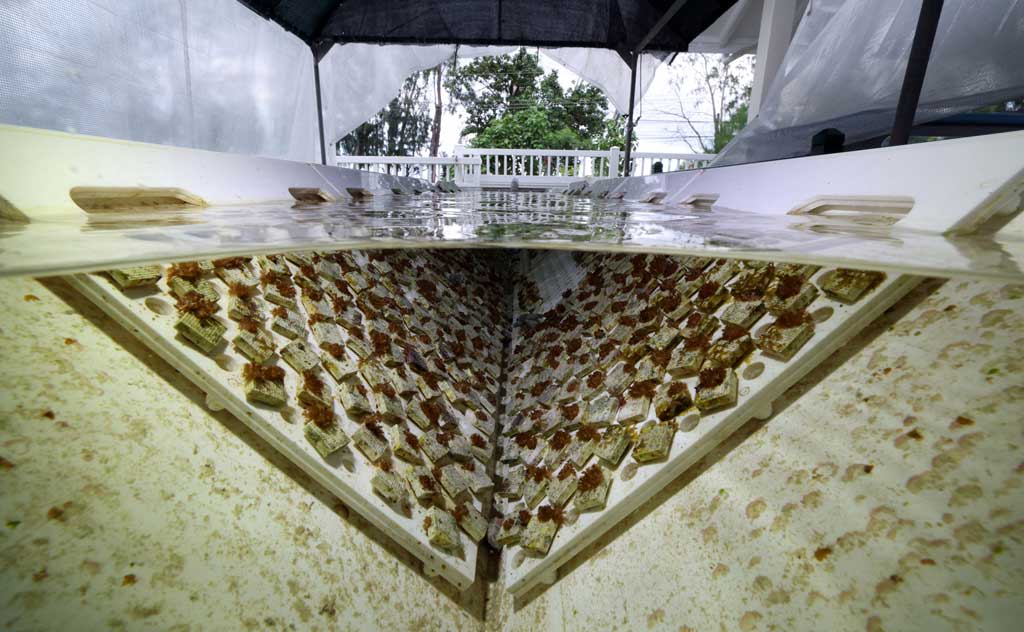
Corals growing at ARC - from the first successful spawning in November 2025 (Photo: CSI)
ITC Reefculture provided a PARwise Pro to measure light for studies of coral growth. Advanced Aquarium Consultancy supplied coral food for training and rearing young corals from the spawning programme. CSI provided protective tank tarpaulins, mesh for coral bundles, yellow filters for fluorescence photography and an underwater imaging kit for monitoring restoration sites.
Coral Bio-Banking
Dr Shah led a session on the upgrades and costs of creating a coral biobank at ARC to safeguard species that could become endangered or disappear in the wild as climate impacts intensify. He said national and international coral biobanks are under discussion and still need funding.
“A biobank would be a natural fit,” said Dr Craggs, who pointed to ARC’s coral spawning facilities and expertise as a foundation for protecting coral biodiversity in Seychelles and the wider region.
Dr Shah led a session on the upgrades and costs of creating a coral biobank at ARC
Looking Ahead
Dr Shah thanked Canon and CSI for the technology and expertise that helped advance coral restoration in Seychelles and the region. He credited five years of restoration work to funding from the Adaptation Fund through UNDP and the Seychelles government, with support from SeyCCAT and CMA CGM. Funding from the Ministry of Environment, Climate, Energy and Natural Resources (MECENR) will keep the work going through the end of 2026.
“What is critically needed now is the strong backing of the authorities and regional and international partners to elevate ARC as a centre of excellence,” said Dr Shah. He said an NGO in a small country needs new partnerships, new ways of working and long-term funding to continue this work and maintain and upgrade such specialised, costly infrastructure.