
Sea turtle poaching remains a serious concern in Seychelles, with two incidents reported this week on Mahé and Praslin islands this week.
A video widely circulated on social media appears to show a man on Praslin dragging a turtle back onto the beach as it tried to return to the ocean. The turtle reportedly suffered a head injury and was taken to Mahé for treatment, thanks to conservation officers and the Seychelles Coast Guard intervening. Authorities say the turtles is responding well to care.
In a separate incident on Mahé, the Ministry of Environment, Climate, Energy and Natural Resources (MECENR) and the Seychelles Police acted quickly to rescue another turtle, which was later released back into the ocean.
The incidents have sparked outrage across the islands, with many people on social media calling for stricter enforcement of the law.
Speaking at a press conference, MECENR Principal Secretary Indra Gamatis reminded the public that sea turtles are strictly protected under Seychelles law.
Under the Wild Animals and Birds Protection (Amendment) Act, 2024, anyone convicted of disturbing, injuring, capturing, or killing a sea turtle or found possessing live turtles or turtle meat faces severe penalties. These include fines of up to SCR 1 million, imprisonment for up to seven years, or both.
The Ministry has urged residents and visitors not to disturb turtles as they come ashore to nest. Anyone who suspects illegal activity is encouraged to contact the Ministry’s GreenLine on 2722111. All information will be kept confidential, and the identity of anyone reporting an incident will remain protected.
Every nesting female matters
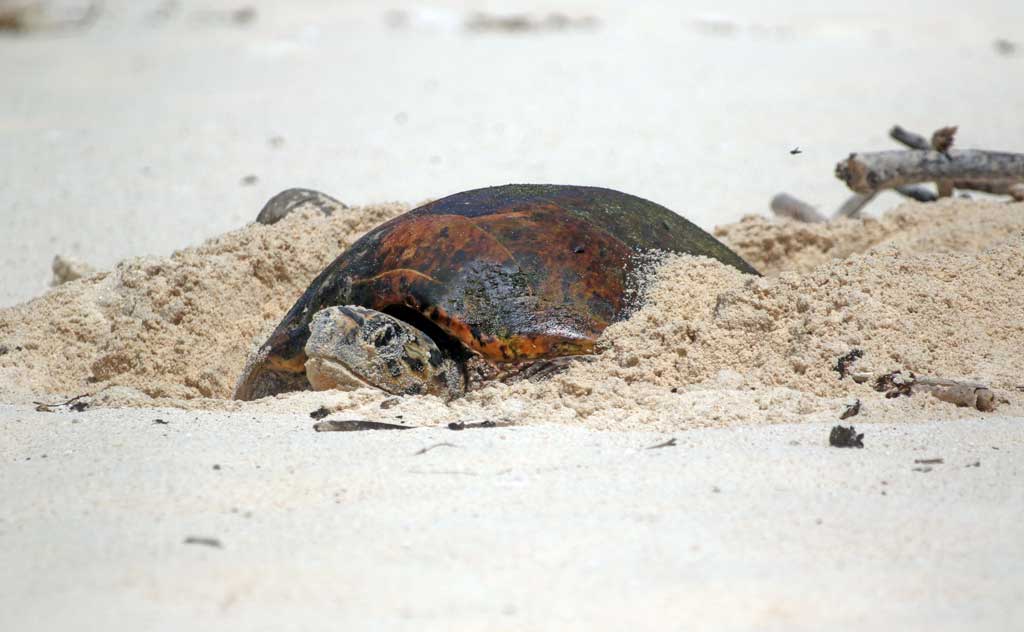
It is the nesting season for the Hawksbill turtle (Eretmochelys imbricata) in Seychelles
The timing of these incidents is especially concerning, as it coincides with the nesting season for the Hawksbill turtle (Eretmochelys imbricata), which is listed as critically endangered on the IUCN Red List. Hawksbill populations have been devastated worldwide by centuries of hunting for their patterned shells. Today, they also face threats from coastal development, habitat loss, and climate change.
In Seychelles, Hawksbills typically nest during the day, making them particularly vulnerable to human interference and poaching.
Sea turtles can take decades to reach reproductive maturity, and only a small fraction of hatchlings survive to adulthood. Losing even one breeding female can therefore have a serious impact on the generations to come.
But Seychelles has also shown that strong protection can make a real difference.
Cousin Island Special Reserve is recognised around the world as a leading example of Hawksbill turtle conservation.
Protected since 1968, the island runs one of the world’s longest continuous turtle-monitoring programmes, which began in 1972. Since monitoring started, the reserve has seen an extraordinary recovery, with nesting Hawksbill females increasing eight-fold.
Everyone’s responsibility

A hatchling heads to the ocean on Cousin Island (Photo: Hugo Bret)
Hawksbill turtles help maintain healthy coral reefs by feeding on sponges, but their importance goes far beyond their ecological role. They are an irreplaceable part of Seychelles’ natural heritage and eco-tourism identity.
With nesting season underway across the inner islands, residents and visitors are encouraged to follow responsible turtle etiquette whenever they encounter a Hawksbill turtle on the beach.
“Seeing a sea turtle come ashore is a remarkable experience. Remember, though, that she’s there to complete an important part of her reproductive cycle,” says Chris Tagg, Cousin Island’s Science Officer.
Whether you are local or a visitor, follow these simple guidelines if you encounter a nesting turtle:
Keep your distance – watch from far, and stay behind the turtle and out of her line of sight. Leave her path between the beach and ocean clear; never stand in front of her or block her way. Don’t touch or move turtles, or disturb nests or hatchlings. Report any encountered or injured turtle, or suspected poaching to the appropriate authorities.
Watching a turtle nest is a privilege. Enjoy the moment quietly, and let her continue undisturbed.
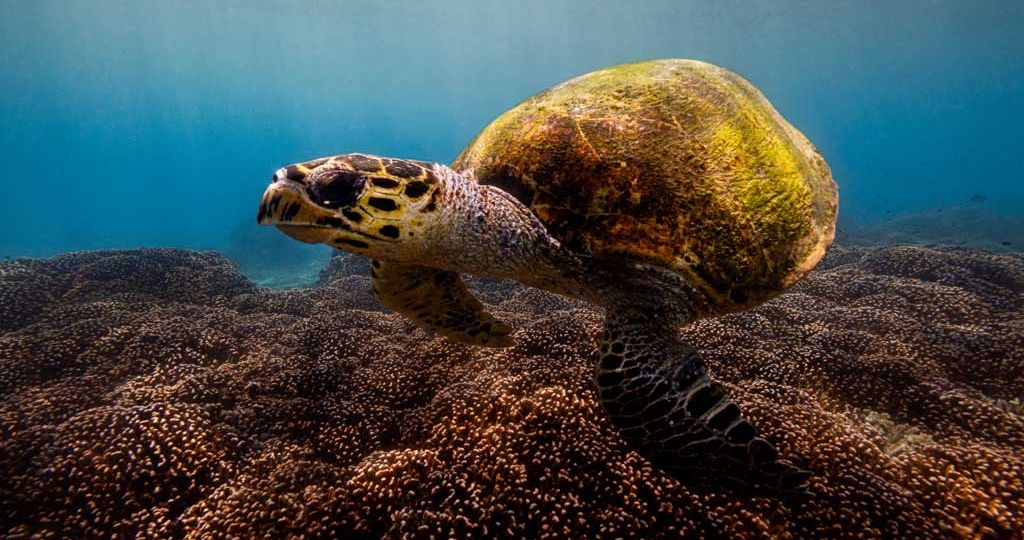
Cover photo: Sea turtles are an irreplaceable part of Seychelles’ natural heritage and eco-tourism identity (CANON - World Unseen)