
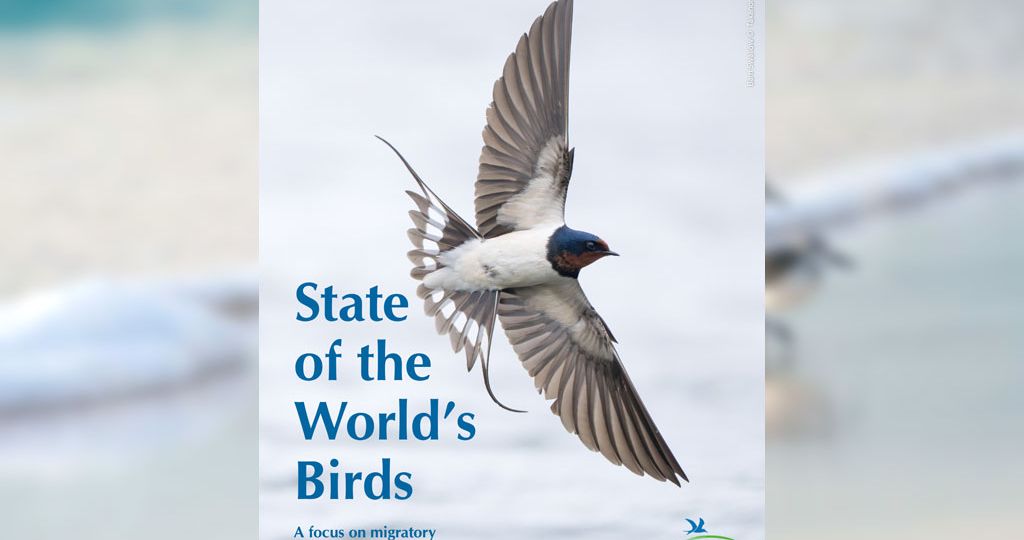
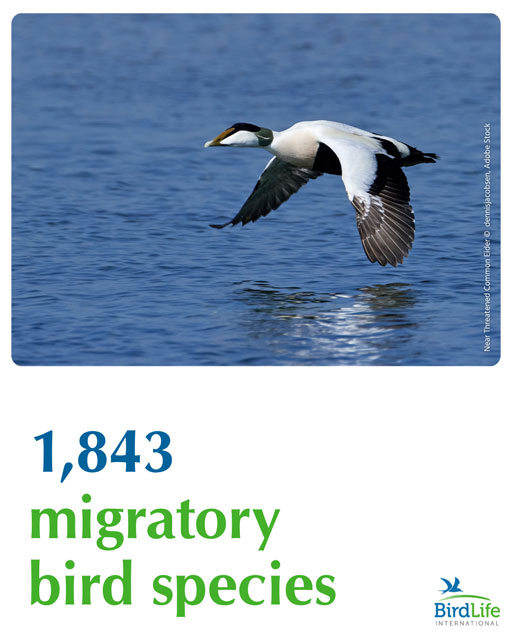
Nearly half of the world’s migratory bird species are experiencing declines, and one in nine teeters on the edge of extinction, according to the latest State of the World’s Birds report, released on September 11th by BirdLife International during the Global Flyways Summit in Nairobi, Kenya.
Published every four years, the report has zeroed in, for the first time, on migratory birds and the flyways connecting their breeding, stopover, and non-breeding grounds.
Species dependent on marine habitats, forests and coastal wetlands are faring particularly poorly; seabirds and shorebirds are among the most threatened, the report also says.
The report highlighted a fundamental truth: a flyway is not simply a line on a map, but a broad interconnected network of critical sites and essential habitats supporting migratory birds across continents and seasons. When one link is broken or weakened, the entire chain is at risk.
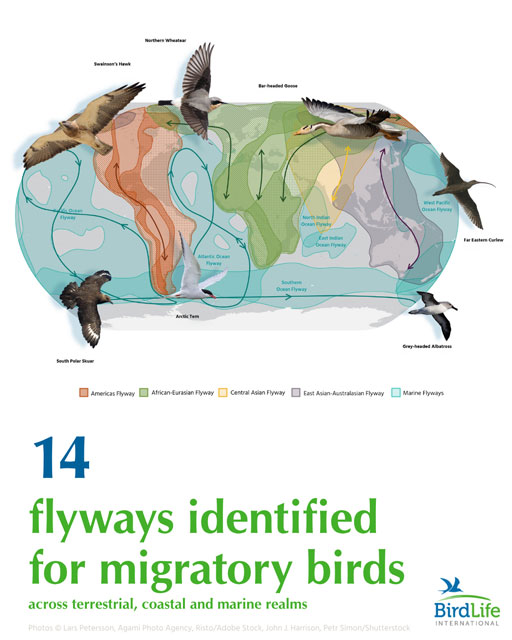
Recognising this interconnectedness, BirdLife International – with 125 Partners in 120 countries – developed the Global Flyways Programme. Rather than focusing on individual sites, species or national borders, this approach aims to secure and restore entire flyways, with Partners working together from breeding grounds to stopover sites and non-breeding areas.
The Nairobi Flyways Declaration
The report was released as a diverse group of governments, scientists, conservation organisations, and financial institutions convened to tackle the increasing pressures on migratory birds and their habitats at the Global Flyways Summit.
The summit concluded with the signing of the Nairobi Flyways Declaration, a commitment to coordinated action across borders and along entire migration routes.
“Migratory birds do not recognise borders. They connect Asia to Africa, the Arctic to the tropics. The Nairobi Flyways Declaration acknowledges this reality — that it needs international cooperation and coordination to keep migratory birds safe,” declared Her Imperial Highness Princess Takamado, Honorary President of BirdLife International.
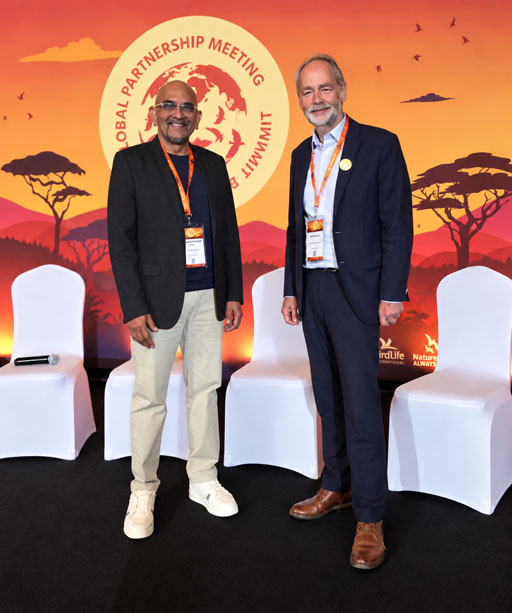
Dr Nirmal Shah, CEO of Nature Seychelles, was among those who signed the Declaration.
As the BirdLife Partner in Seychelles, Nature Seychelles is part of the global network conserving birds and biodiversity.
The NGO has been the BirdLife Partner in Seychelles since 2002, building on a long-standing partnership that began back in 1968 with the purchase of Cousin Island to protect the Seychelles Warbler, ultimately leading to the rescue of all threatened endemic land birds in Seychelles.
Seychelles, although not on the main migratory flyways to Africa, still attracts migratory birds. The islands and their surrounding waters provide important habitats for seabirds species that number in the millions.
Photo: Dr Shah with Dr Mike Rands, former chief executive of BirdLife International.
For Nature Seychelles, this report underscored the need to safeguard seabirds and their habitats. Seven species breed on Cousin Island Special Reserve managed by Nature Seychelles, with an estimated 300,000 seabirds using the island.
Cousin Island is recognised as both an Important Bird Area and a Key Biodiversity Area, where ongoing monitoring keeps track of seabird populations and their breeding success.
Monitoring generates valuable data to understand population trends and shifts in the broader environment. Seabirds are particularly important habitat indicators since they rely on healthy marine ecosystems for food.
“Migratory birds are sentinels, and their declines reveal growing pressure on the natural systems that sustain us. But the science is equally clear: conservation works, with co-ordinated action preventing extinctions and helping populations recover,” says Dr Stuart Butchart FRS, Chief Scientist, BirdLife International, and senior editor of State of the World’s Birds
However, protecting these ecosystems goes beyond just having scientific knowledge and effective management; it requires ongoing investment.
“Without consistent financial backing, it becomes incredibly tough to sustain the monitoring, habitat management, and protection that conservation relies on. The commitments made in Nairobi are crucial because they acknowledge that funding needs to align with the scale of the challenge we face,” said Dr Nirmal Shah, Nature Seychelles Chief Executive. “Seychelles is not eligible for overseas development assistance (ODA) so Nature Seychelles is facing a financial crunch not experienced previously. We desperately need funding for bird conservation.”
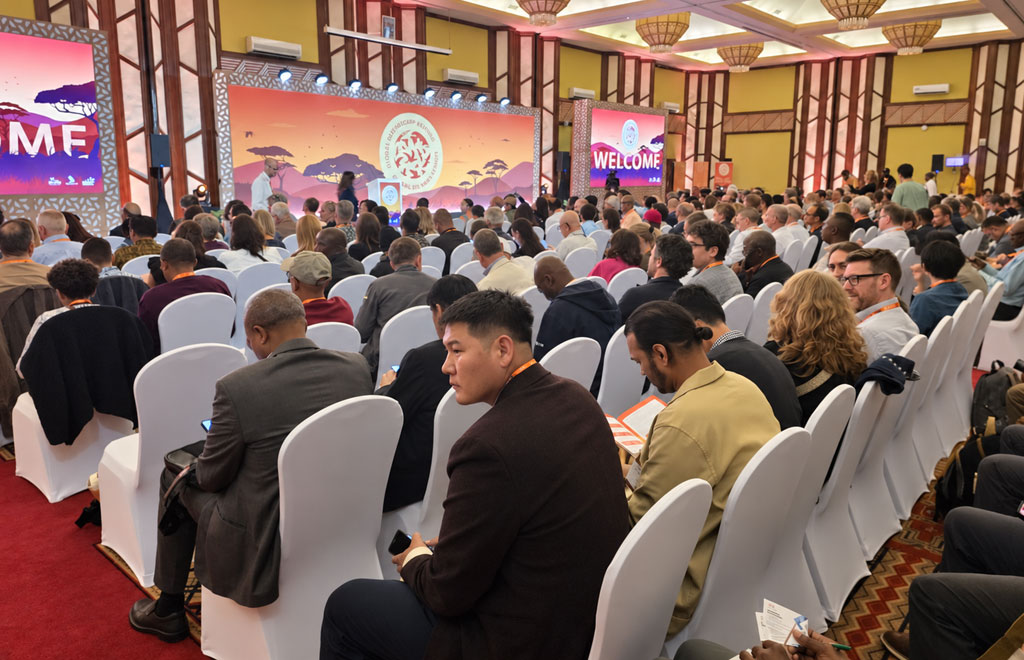
Attendees at the Global Flyways Summit
The Nairobi Summit however brought to light some noteworthy financial commitments. Since 2021, development banks have mobilised over US$6 billion in conservation finance, with major initiatives now backing wetlands, landscapes, and seascapes across countries in Africa, Asia, Europe, and the Americas.