
The third week of July is Coral Reef Awareness Week. It comes with a grave alert. The US National Oceanic and Atmospheric Administration (NOAA) latest forecast from June 2026 suggests that a strengthening El Niño is underway in the tropical Pacific, with the potential to reach “very strong” intensity during its peak from October to December 2026. This could lead to an uptick in heatwaves, droughts, heavy rainfall, and other extreme weather events around the globe, as highlighted by the World Meteorological Organization (WMO).
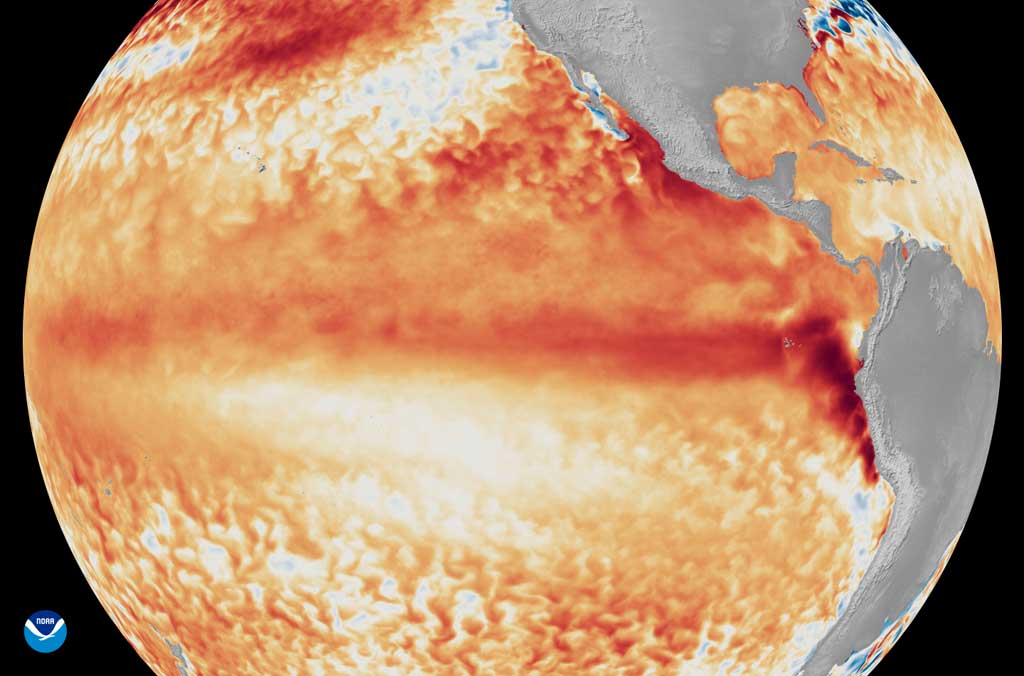
Satellite imagery showing the difference from average sea surface temperatures at the equator in the tropical Pacific Ocean (depicted using various shades of red and orange for warmth) during the first week of June 2026, as compared with the baseline used by NOAA’s Coral Reef Watch. (Image credit: NOAA Satellites)
This spells trouble for coral reefs, and we’re closely monitoring these developments to understand their potential impact on our reefs.
To understand why this upcoming climate cycle is so concerning, we need to look at recent events that have already taken a toll on coral reefs.
From early 2023 to mid-2025, we experienced the fourth global mass coral bleaching event, announced by the International Coral Reef Initiative (ICRI) in April 2025. It turned out to be the most extensive and longest-lasting one on record. A staggering 84% of the world’s reef areas faced bleaching-level heat stress during this time. Seychelles’ reefs were not spared. We recorded coral bleaching on Cousin Island Special Reserve.
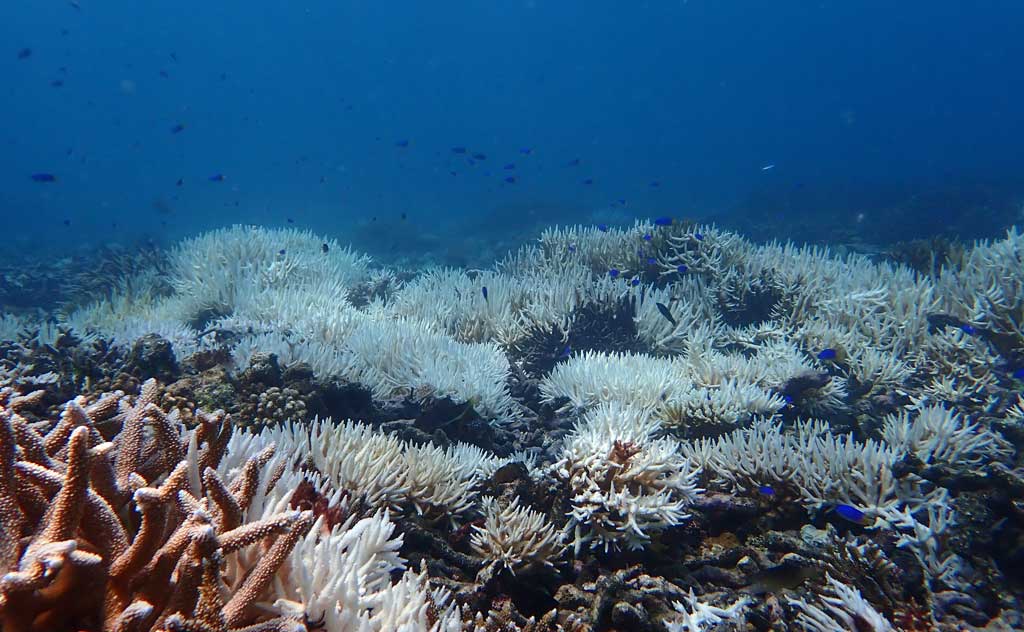
Corals bleached during the fourth global mass coral bleaching event
According to scientists, coral reefs require about a decade to recover from a significant bleaching event. However, this is only works if the reef isn’t subjected to any additional stress during that time.
Even though El Niño originates thousands of kilometres away, its effects can ripple all the way to the Western Indian Ocean if conditions allow. The 1998 El Niño coupled with the Indian Ocean Dipole (IOD) triggered a large coral bleaching event documented across the Indo-Pacific, including the Seychelles. Since then, every major El Niño has been linked to a global bleaching event.
With the approaching threat of El Niño, the future looks forbidding for reef populations that are still trying to recover from previous damage.
It’s important to note however, that the impact of each El Niño event can differ widely based on its intensity, duration, the time of year it occurs, and how it interacts with other climate patterns, like the Indian Ocean Dipole. Not every part of the world feels the effects the same way, and even within a single region, the consequences can vary significantly.
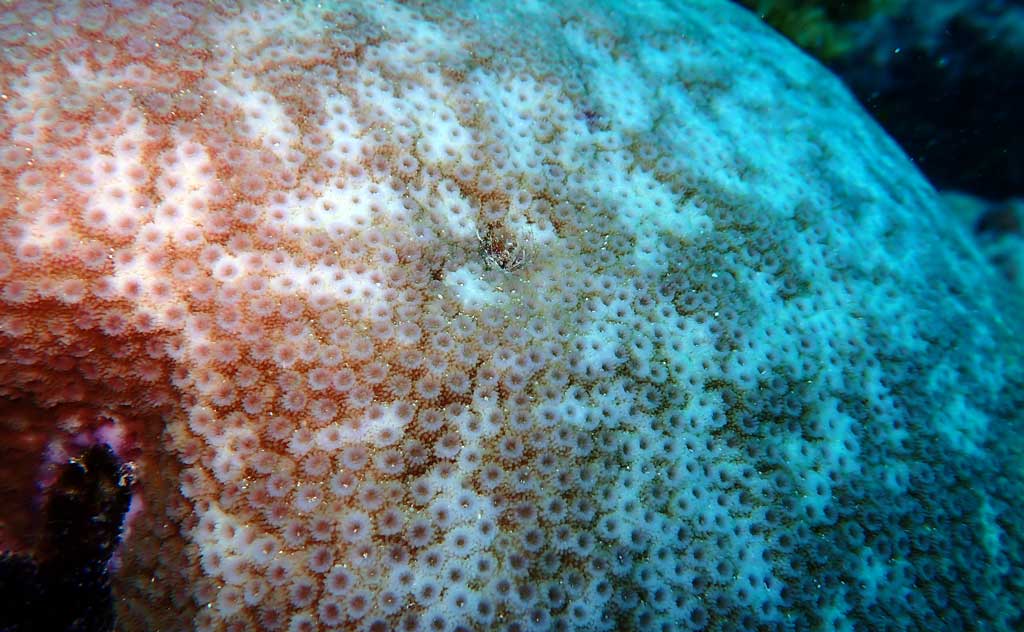
The 1998 El Niño triggered the largest coral bleaching event
What can we do?
Strengthening reef resilience is key. Nature Seychelles’ Reef Rescuers programme is restoring coral reefs around Cousin Island Special Reserve in an initiative kicked off in 2010 as a response to the coral die-off that followed the bleaching event in 1998.
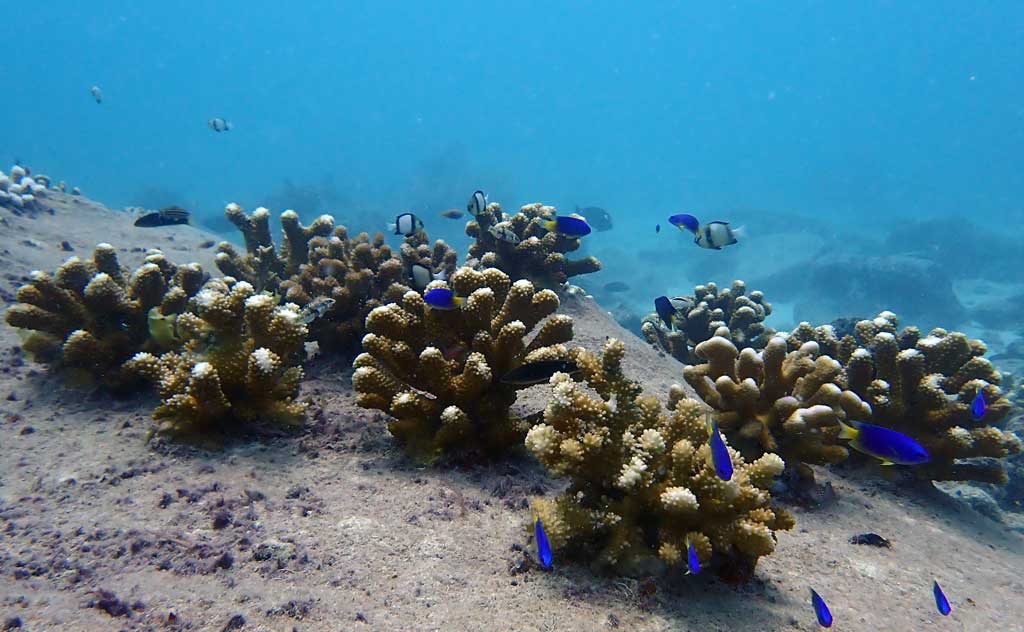
Coral reef restoration on Cousin Island
During the most recent global bleaching event, the Reef Rescuers team took proactive measures to reduce additional stress on the corals by relocating nurseries to cooler, deeper waters and launching a Coral Shading Initiative to shield shallow-water corals from excessive light stress.
In 2025, Nature Seychelles opened the Assisted Recovery of Corals (ARC) facility on Praslin, marking Seychelles’ first large-scale land-based coral nursery. This facility was created to offer a safe refuge for corals during heat stress events and to develop a genetic broodstock for future restoration efforts.
The same year, in partnership with Canon and Coral Spawning International, the facility has also made impressive progress in enhancing coral sexual reproduction through the establishment of a breeding lab aimed at boosting diversity and genetic resilience.
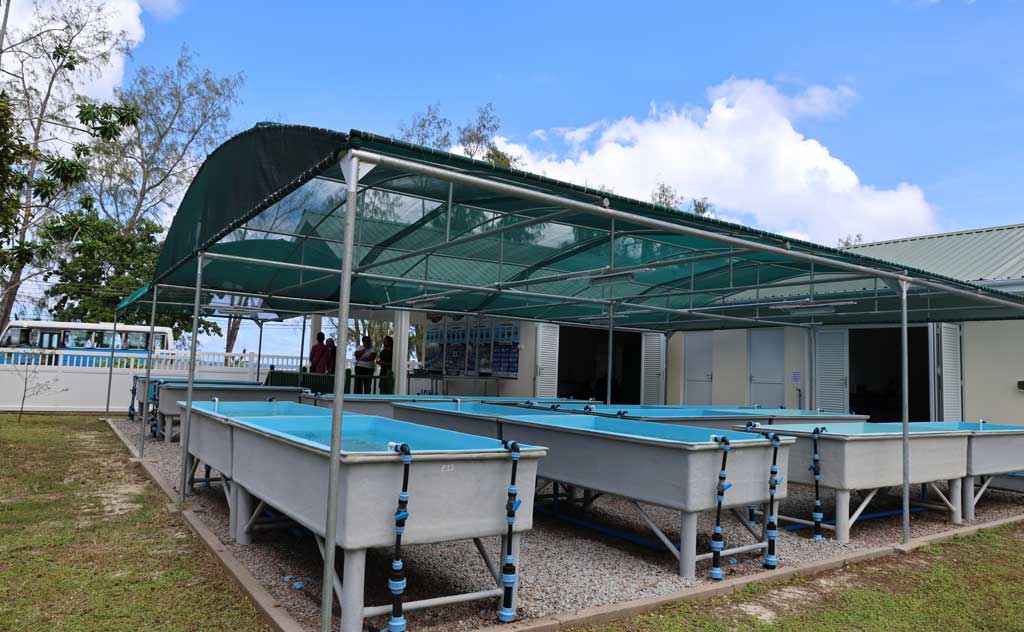
Nature Seychelles' Assisted Recovery of Corals Facility (ARC)
But while global restoration efforts can help buy time for reefs, they simply can’t keep pace with the ongoing onslaught on corals from heat stress. Moreover, coral reef restoration initiatives worldwide remain relatively small compared to the enormity of the crisis at hand.
This is why Nature Seychelles has consistently argued that the only true solution to saving corals is to cut down on the greenhouse gas emissions that are causing ocean temperatures to rise in the first place.