The “State of Biodiversity Action: Global Report on Collective Progress in the Implementation of the Kunming-Montreal Global Biodiversity Framework” is the UN Convention on Biological Diversity’s revised draft assessment of whether governments are delivering the 23 targets agreed in 2022.
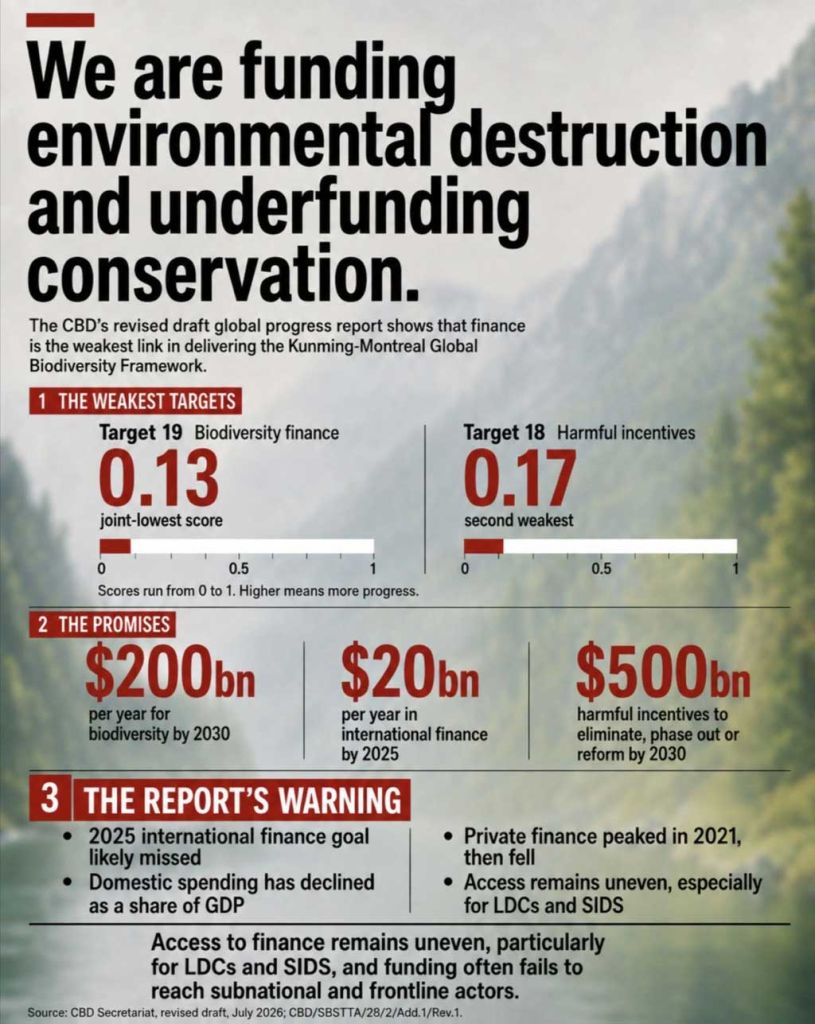
Its verdict on money is devastating. Biodiversity finance—Target 19—scores 0.13, joint-lowest in the framework. Target 18, requiring governments to reform subsidies and incentives that damage nature, follows at 0.17.
Governments pledged to mobilise at least US$200 billion a year for biodiversity by 2030, including US$20 billion in international finance by 2025. Yet the report indicates that the 2025 milestone was probably missed. Domestic biodiversity spending has weakened, private finance has fallen from its 2021 peak, and access remains uneven.
For small island developing states, the failure is sharper. Many SIDS are still building systems for planning, tracking and reporting biodiversity finance. Conservation remains hostage to budgets, short donor projects and external funding decisions. Even where international finance has increased, it remains below the conservation, restoration and sustainable-use needs identified in national plans. SIDS are being handed responsibilities with temporary, inadequate and difficult-to-access funding.
Yet, public money continues to bankroll destruction. The Framework calls for harmful incentives to be reduced by at least US$500 billion annually by 2030, yet governments have barely completed the first step: identifying them.
The Aichi Biodiversity Targets ended in 2020 with none fully achieved at the global level. The KMGBF was supposed to mark a break with that failure. But with finance lagging, harmful subsidies intact and the countries carrying the greatest biodiversity burdens still struggling to access funds, an uncomfortable question now hangs over the world: will the KMGBF deliver real change or meet the same fate as the Aichi Targets, remembered as another decade of ambitious promises the world chose not to finance?
Meanwhile, we continue to embrace new international obligations, such as the BBNJ Agreement, the High Seas Treaty, without any credible plan to finance or build the capacity required for implementation, or to prevent these commitments from siphoning scarce resources away from the KMGBF and other urgent priorities within national jurisdictions. There will be winners and losers in this game of who has the shiniest or bigger tool.