
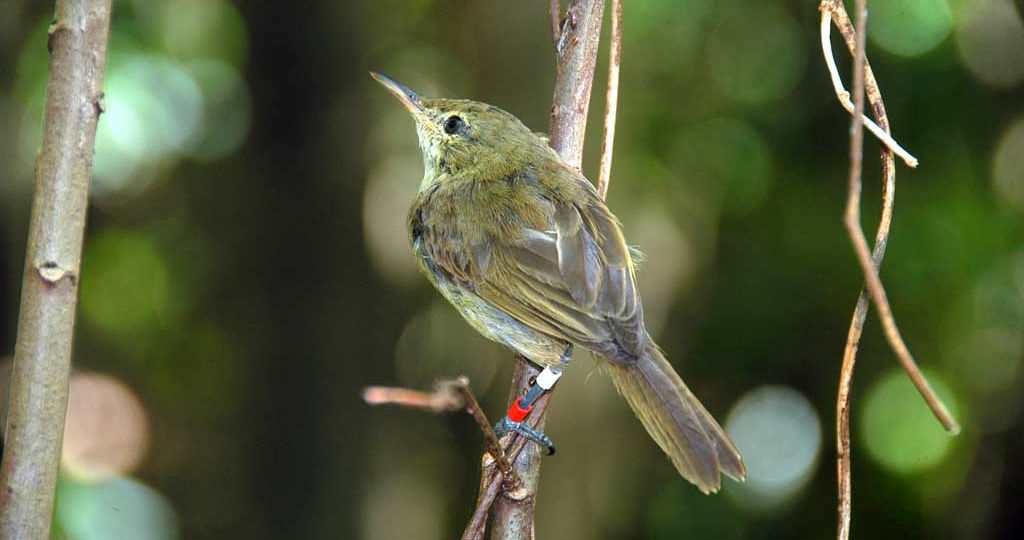
By Nirmal Shah
Scientists have assembled a detailed DNA map and genetic records for 1,935 Seychelles warblers from Cousin Island. The study was published on 19 November 2026 in G3: Genes|Genomes|Genetics.
The study builds on more than four decades of research on Cousin Island, where generations of Seychelles warblers have been individually identified and followed throughout their lives.
Using blood samples collected between 1982 and 2019, the researchers identified around 18 million positions where DNA differs between birds. They also checked parentage and corrected sample identification errors, producing more reliable family records.
Because individual birds have been followed throughout their lives, researchers can compare their DNA with records of survival, breeding and health. They can investigate whether breeding between relatives reduces the chances of surviving or producing offspring, and whether inherited differences help birds resist disease or cope with changing conditions.
The paper establishes the genetic resources for these investigations. Further analysis could help conservationists decide which birds to move between islands to maintain genetic diversity and healthy populations.
The authors acknowledge Nature Seychelles and its wardens for facilitating research on Cousin Island.
Reference
Lee, K. G. L., et al. (2026). Chromosome-level assembly and population-scale genomics in an intensively monitored wild bird, the Seychelles warbler. G3: Genes|Genomes|Genetics, jkag307.