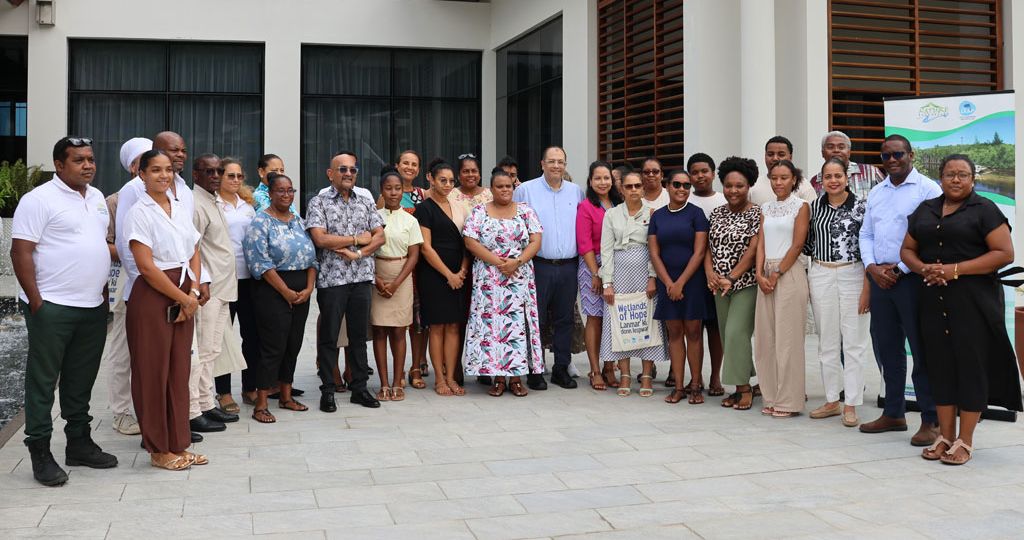
On Thursday, May 27, 2026, Nature Seychelles celebrated the successful ending of its EU-funded ‘Wetlands of Hope’ project during a closing ceremony at the Canopy by Hilton Seychelles Resort. The event brought together government officials, private sector partners, community members, and young conservationists to celebrate two years of landmark progress in wetland conservation.
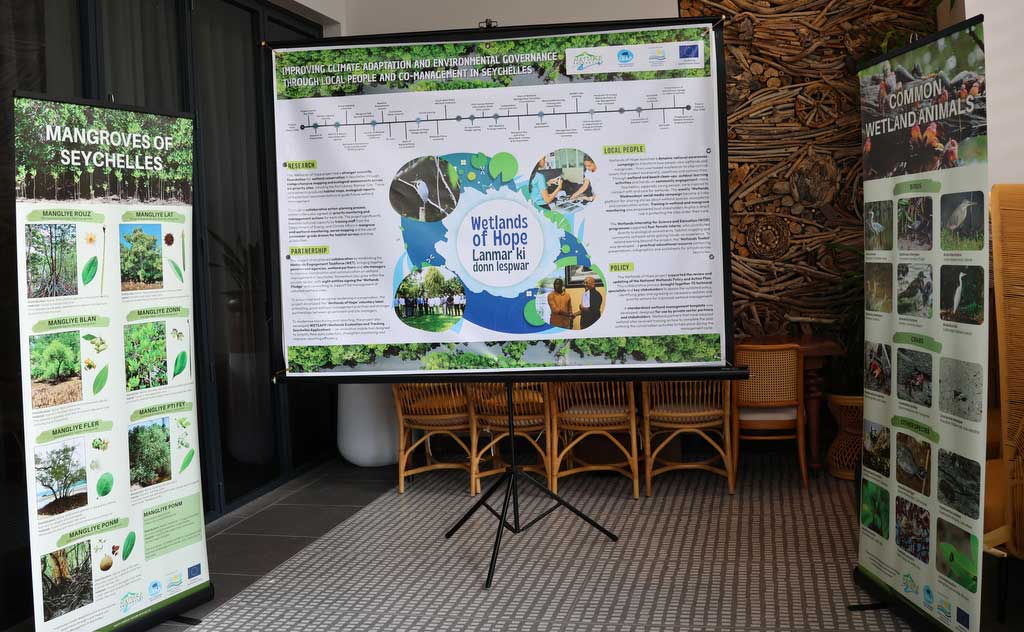
The project, titled “Improving Climate Adaptation and Environmental Governance through Local People and Co-Management in Seychelles,” was carried out in collaboration with the Ministry of Environment, Climate, Energy and Natural Resources (MECENR) with funding from the European Union. It focused on enhancing wetland research and management, foster partnerships, raise public awareness, and strengthen regulatory frameworks.
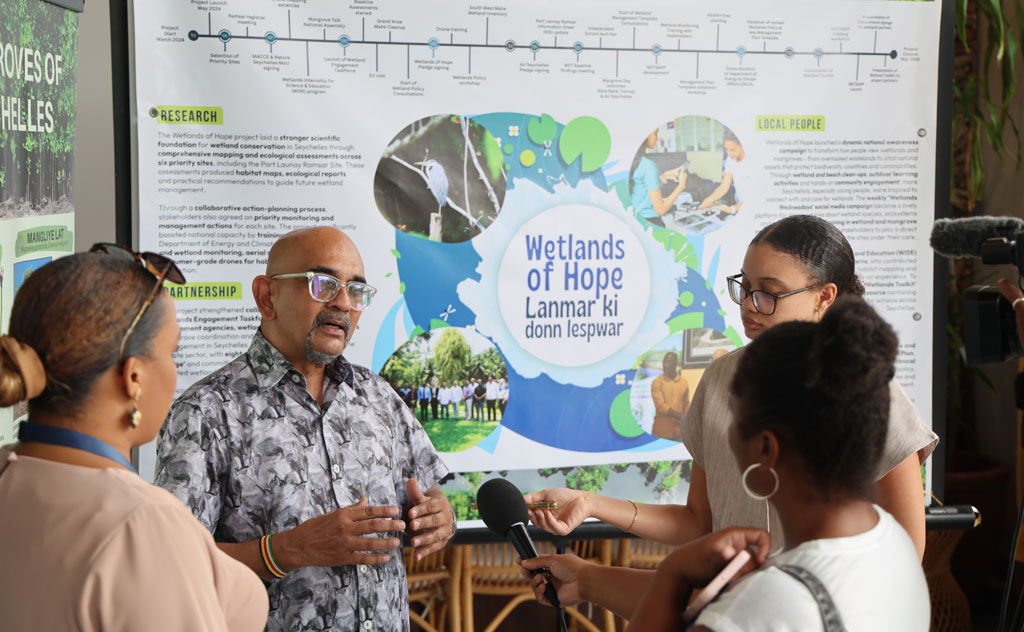
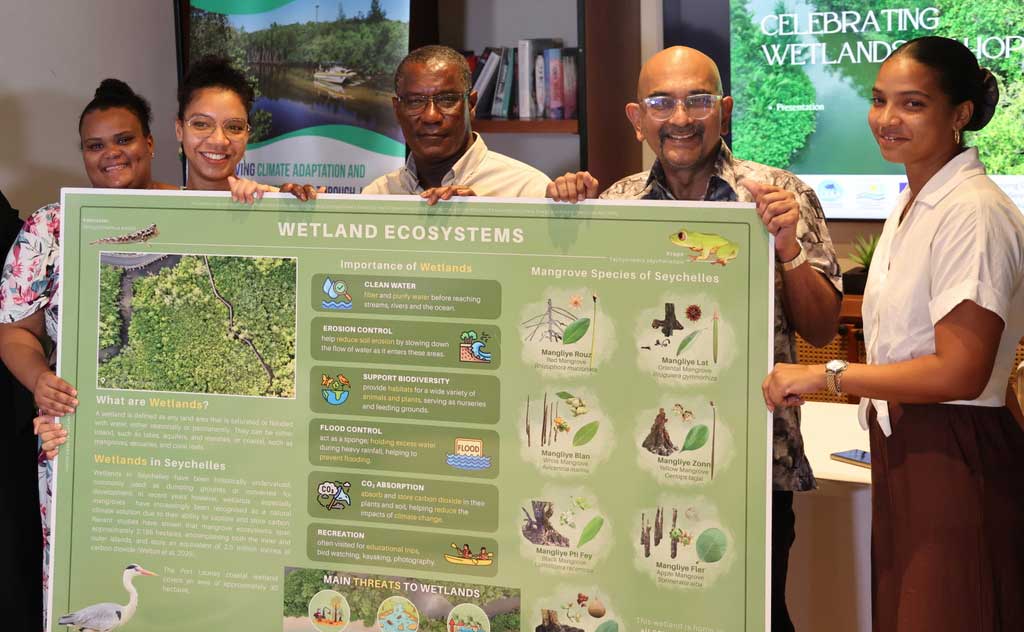
Dr Nirmal Shah - CEO, Nature Seychelles
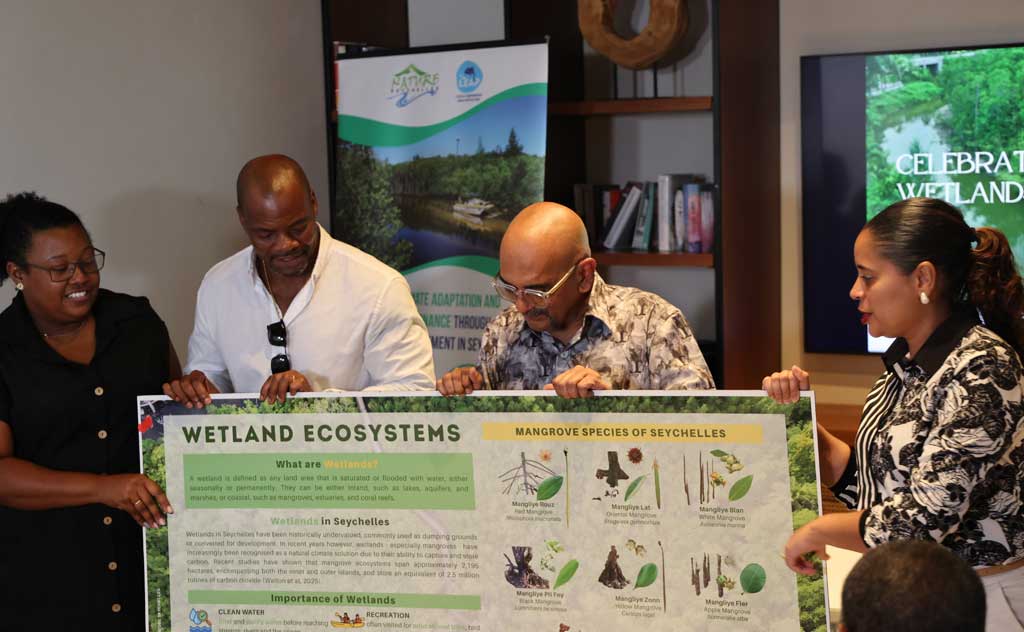
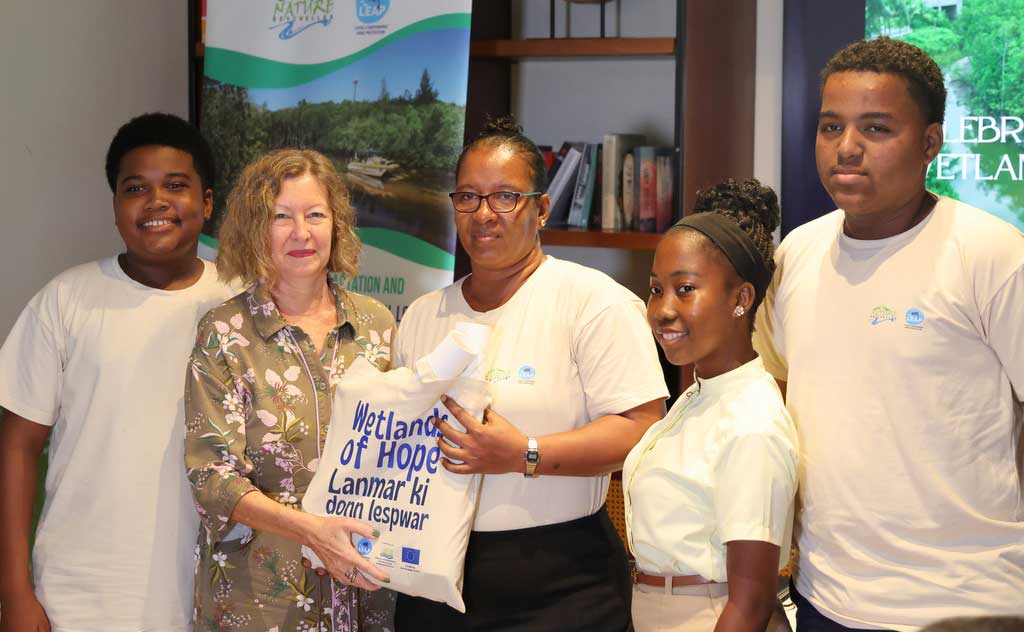
At the ceremony, wetland partners were presented with educational signage for their sites and received the Wetlands of Hope Toolkit, which included site-specific ecological reports, awareness posters, and educational guides.
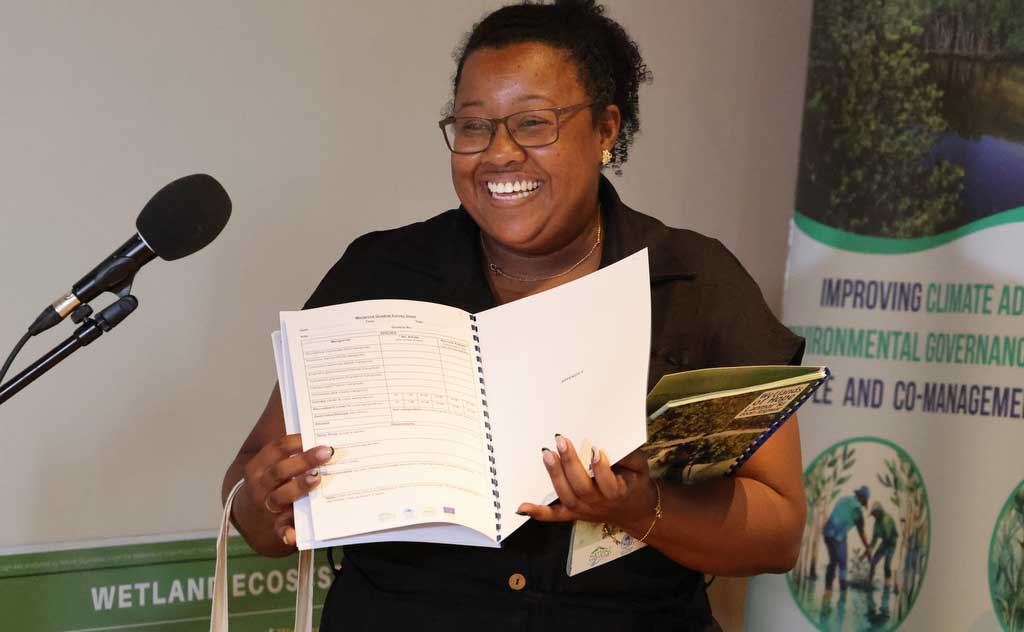
Corinne Julie, the project’s Technical and Advocacy Manager, shared a variety of tangible outcomes: ecological assessments at six key wetland sites, the WETSAPP mobile monitoring app, an updated National Wetlands Policy, and a template for wetland management plans. Awareness initiatives featured the popular Wetlands Wednesdays social media campaign led by Science and Education Officer Esthel Didon, along with articles in print media and community events. A standout moment was the signing of the Wetlands of Hope voluntary pledge by six hotels, one bank, and one national airline, with training provided for their staff.
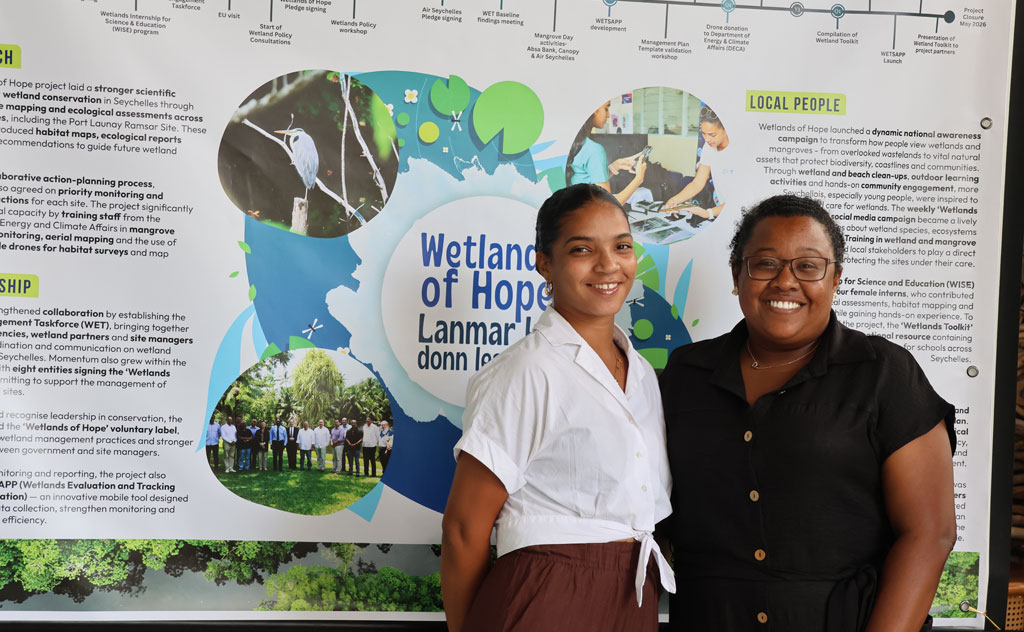
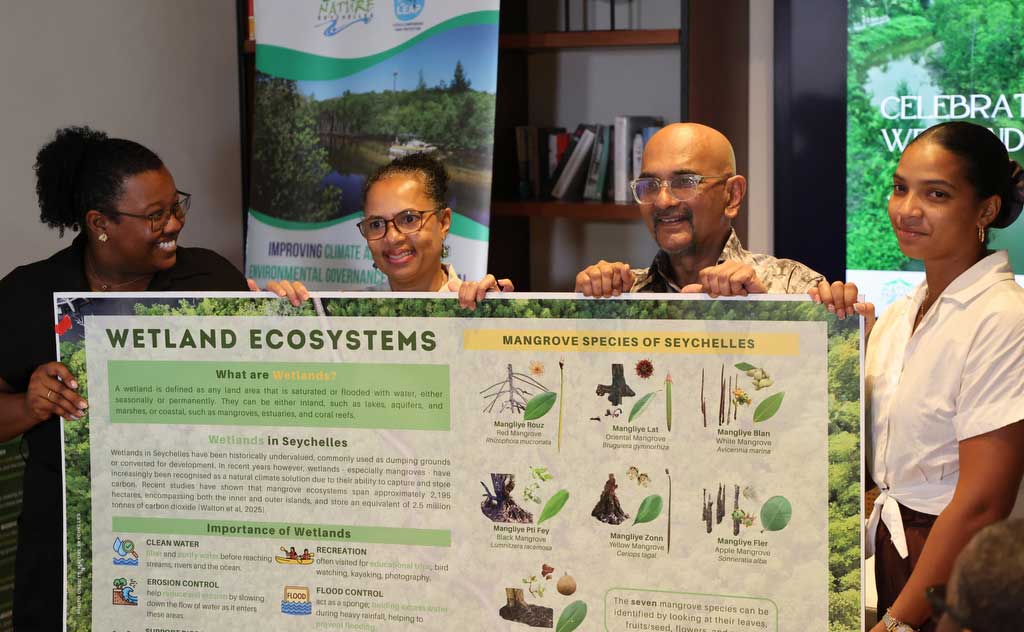
The project was led by Corinne Julie (R) and Esthel Didon (L)
Dr. Nirmal Shah, Chief Executive of Nature Seychelles, reflected on the journey, noting that partner organizations came in unsure of their roles but left empowered with the tools and confidence to make a difference. He highlighted the renewal of the policy and management template as a major milestone, emphasizing the extensive stakeholder consultation process that made it possible.
Dr. Shah expressed his appreciation for the voluntary pledge signed by private sector partners, urging them to see it as a valuable asset: “The pledge is very important because it gives you this basis to say, yes, we are custodians of this very important part of the environment,” he remarked.
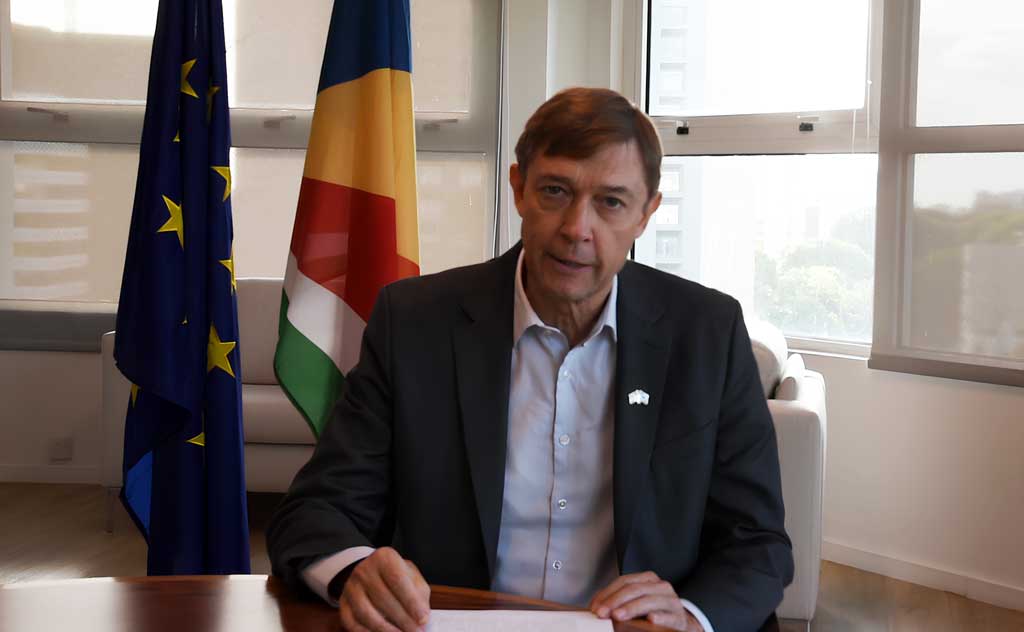
In a video message, H.E. Mr. Oskar Benedikt, the EU Ambassador to Seychelles, highlighted Europe’s continued commitment to protecting biodiversity in the Indian Ocean.
He commended Nature Seychelles and the Wetlands of Hope project as a prime example of shared responsibility, emphasizing that conservation efforts cannot be done by single entity alone.
“Protecting wetlands and mangroves cannot be done by one organisation, by government alone, or conservation alone. It requires the engagement of businesses and citizens who recognise that ecosystems are the foundation of a resilient and prosperous future.”
The Ambassador reaffirmed the EU’s support for nature-based solutions to combat the coastal erosion and climate challenges increasingly confronting island nations like Seychelles.
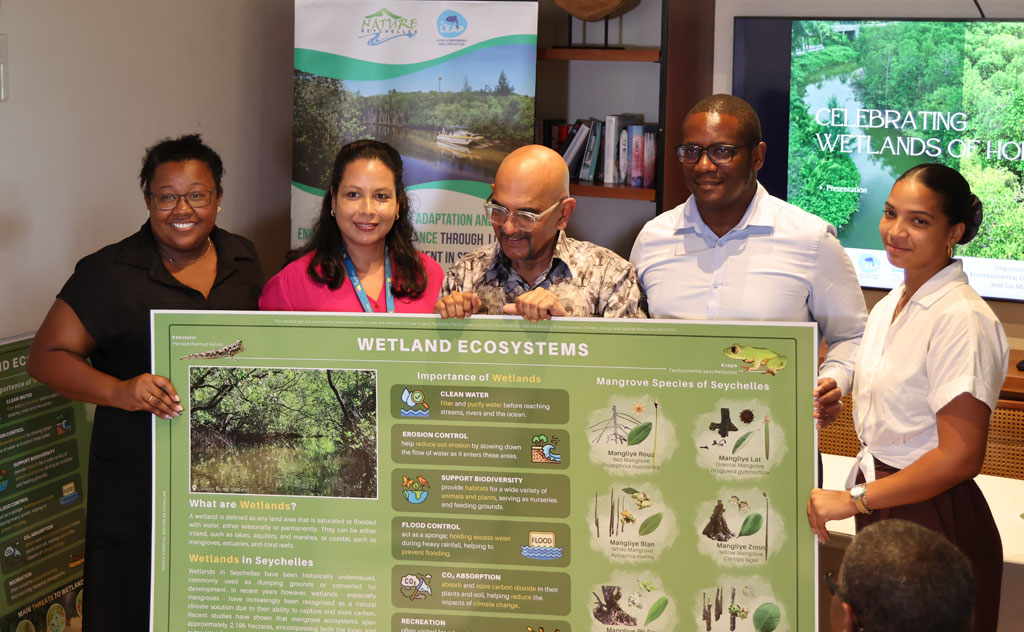
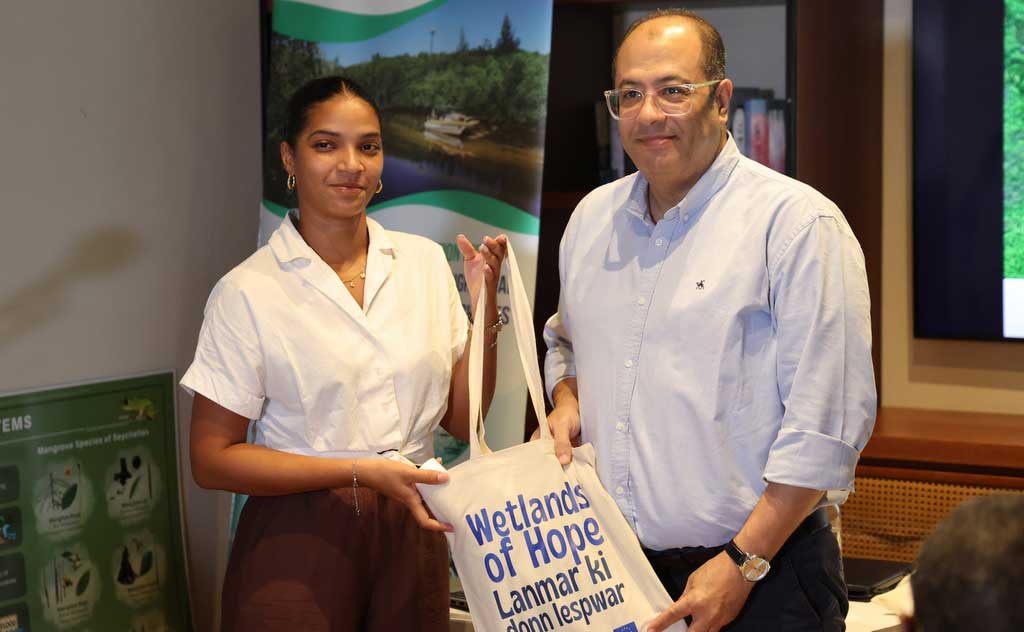
Air Seychelles receiving signage for Caiman Estate Wetlands
Mike Mousbe, Chief Operations Officer of Air Seychelles, shared reflections on behalf of the national airline, which adopted the Caiman Estate wetland in Anse Boileau in April 2025.
“This project has challenged us all to see wetlands not as forgotten spaces or ‘wastelands,’ but as the quiet superheroes of our ecosystems,” he said, acknowledging aviation’s environmental footprint and the airline’s responsibility to act. “It has shown us that conservation works best when it is shared, when government, communities, NGOs, and the private sector come together with a common purpose.”
He noted that the airline’s staff volunteers participated in clean-up activities, welcomed students from the School for the Exceptional Child, and engaged with the local community, including tree planting at the Home for the Elderly. With WETSAPP now in action, the team is actively contributing data to ongoing monitoring initiatives.
Closing the proceedings, Jean Claude Labrosse, speaking on behalf of MECENR, highlighted the Wetlands of Hope Pledge as a pivotal moment, which empowered partners, many of whom were previously unfamiliar with wetlands, to take charge of their own sites.
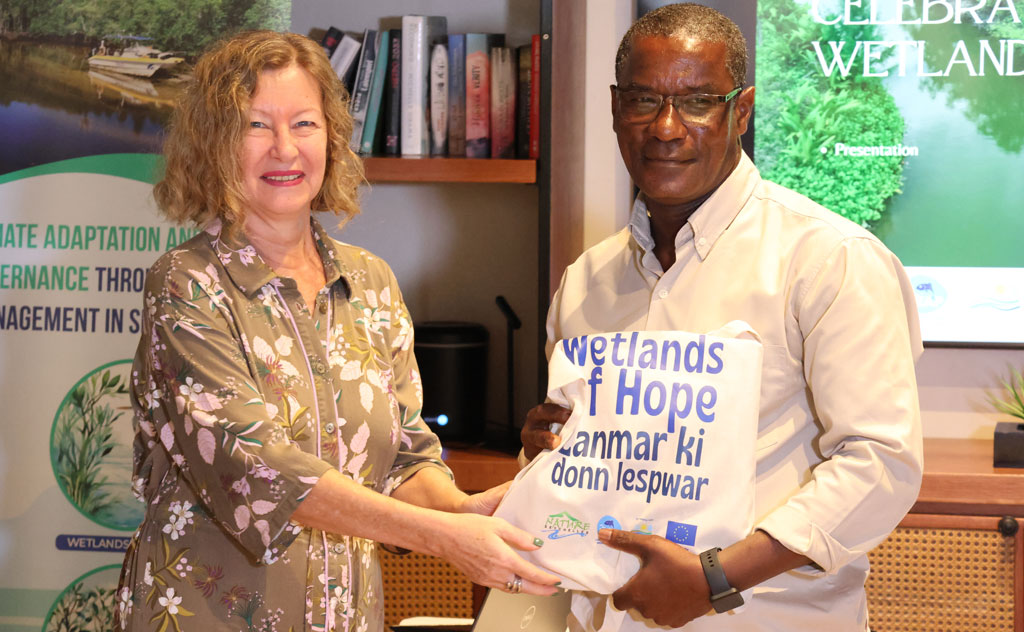
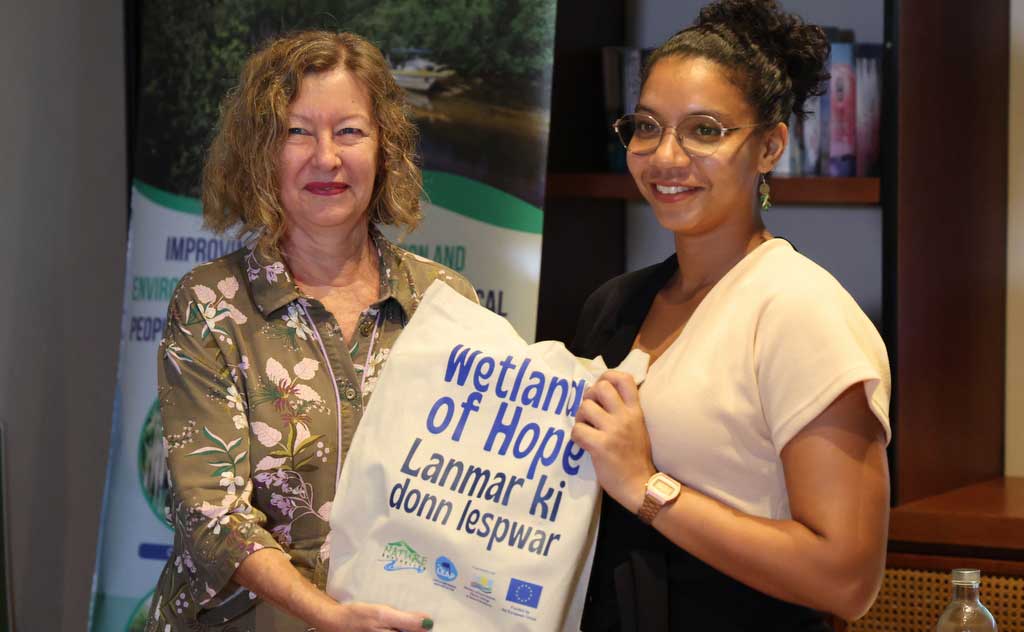
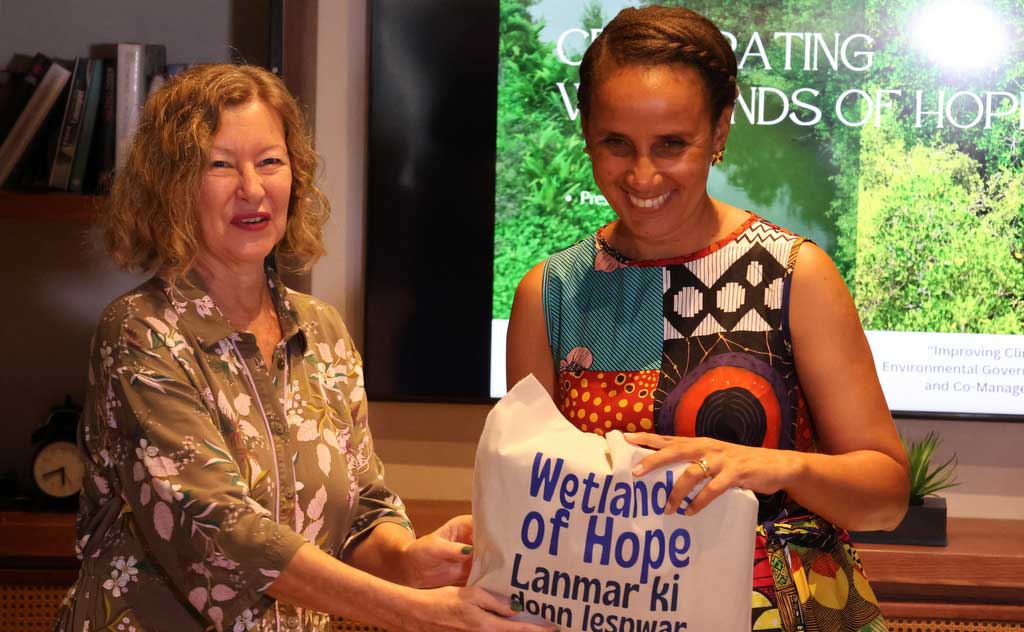
Kerstin Henri (L) Nature Seychelles Director presenting the toolkit to Jean-Claude Labrosse (MECENR)
He expressed his appreciation for the updated policy, calling it a crucial national guide, and noted an unexpected yet significant indicator of the project’s impact: the Ministry is now getting inquiries from new organizations eager to formalize their wetland commitments through MOUs. “Now they see the reason, they see the necessity of adopting either wetlands or rivers,” he stated.
Speaking to the press after the event, Emma Didon, a member of the Port Glaud Co-Management Committee, shared how residents have been energized by both LEAP 1 and the Wetlands of Hope project to engage in activities like planting, cleaning, and monitoring the Port Launay Ramsar site.
Trained by Nature Seychelles to perform ecological health assessments with the Ministry every six months, she pointed out a notable shift in community mindset: “The main positive change has been the increased engagement in the community – with schools especially. There’s been a lot of knowledge exchange. People are willing to get involved.” Her next step, she said, was simple: get back in the field, with community observations feeding directly into WETSAPP for the Ministry to track.